Total Pageviews

Showing posts with label crystals. Show all posts

Thursday, June 28, 2012

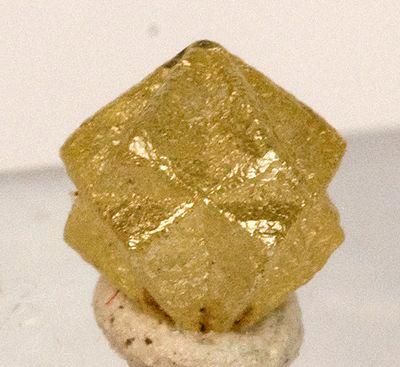
What Diamond Crystals look Like


Interpenetrating cubes of diamond
Photo by Rob Lavinsky


The word morphology means what it looks like.  Diamond crystals are a good example of this as in the growth process they are able to take on many guises.  They all however are caused by the basic shape of the carbon cell that controls the diamond growth.  The carbon cell is used to build the diamond crystal or stated in another way a diamond molecule.  These carbon cells are deposited onto the nucleus of the diamond one layer at a time until the diamond finishes growing.  In its purest form a diamond crystal is cubic like a crystal of sugar.  The addition of various elements however causes a diamond to morph into different shapes or colors.

The most common of these shapes are the cubic form that is square like a salt crystal or the octahedron which is two pyramids stuck together base to base.  From this simple crystal form the shape of a diamond becomes more complex.  This is caused by many different physical process; the most common being the physical space allotted to the diamond crystal to grow.  If this allotted space is cramped and not shaped like a typical space the diamond crystal will grow into the shape of the space.   Something that will further complicate the final shape of the diamond crystal that is delivered to the surface of the Earth is the dissolution of the diamond in carbonate or silicate bearing water at the pressure-temperature conditions encountered in the diamond stability field.  This was established experimentally by Alexander F. Khokhryakov and Yuri N. Pal.Yanov of the Siberian Branch of the Russian Academy of Science in Novosibirsk Russia

The macle another form of diamond crystal
Photo by Rob Lavinsky


One of the stranger forms of diamond growth is exemplified by the rough diamonds from the Ekati, Diavik and Snap Lake mines in Canada.  These diamonds are dug out of the ground wearing fur coats that are fibrous overgrowths of diamond crystals with a transparent diamond crystal at the center.  Apparently somebody told these diamonds they were coming from Canada, so they came prepared for the Canadian weather.  How this came about was the diamond crystal had more then one stage of growth. 

There are one or more generations of crystal growth in most diamond crystals.  A diamond crystal can also undergo retrograde growth where conditions either in the area in the mantle where it was formed or on its way to the surface in kimberlite magma.  Some of these crystals can become bizarre in their appearance, and some of the more bizarre are what are called skeletal crystals.  Sometimes the diamonds are etched into more rounded shapes by the action of the chemistry of where they are formed or transported.

The macle is another shape the diamond can naturally take this is a twinned diamond taking a triangular shape and has two large triangular sides.


References:

Harlow, George E., The Nature of Diamonds, American Museum of Natural History, © 1995

How Diamond Crystals Grow


A diamond crystal from Crater of Diamonds State Park, Arkansas
Photo by Rob Lavinsky


Diamonds don’t grow overnight because in nature their growth proceeds one atom of carbon at a time with four carbon atoms bound together by chemical bonds.  The natural way that this bonding occurs will normally create a crystal that is an octahedron in shape.  This shape however can be altered by several different parameters imposed by the space allocated to the growth of the crystal in the media in which it is formed.  In the process of growing diamonds are apt to include small crystals of the surrounding material into their crystal shape.  These inclusions are literally windows into the mantle of the earth that are brought to the surface when the diamond is carried to the surface of the earth by a kimberlite or lamproite.

Diamonds are nothing more complicated then a crystal of pure carbon, and are in fact an allotropic form of an element that can have other crystalline forms either amorphous as lampblack or as graphite from which we make pencils.  There is another rarer amorphic form of carbon termed ‘lonsdalite’ that is somewhere between graphite and diamond in physical structure.  Lonsdalite is not a variety of diamond but is instead a different material.  In lonsdalite there is a repeating networking of carbon atoms that all point in the same direction rather then alternating back and forth as in a diamond.  Its crystals instead of forming cubes or tetrahedra as the diamond does are instead hexagonal.  Although it is often found with diamonds it is considered to be an allotropic form of carbon formed as the result of shock from a large meteorite.

From work performed on some of the diamonds from the Ekati diamond mine in the Northwest Territories of Canada it would appear that the growth of diamond crystals begin with a small fragment of graphite upon which the diamond crystals are deposited over time.  A matter of controversy is the actual speed in which diamond crystals are formed.  Experiments in Japan with manmade diamond crystals suggest that it is possible to grow a ten caret crystal in several hundred hours.  This of course is under ideal conditions and in nature would probably take much longer as the diamond crystal would have to scavenge its carbon atoms from the surrounding rocks.  Carbon is a rare element in the earth’s rocks.

Most of the carbon available to create a diamond has been postulated to come from oceanic crust that has been subducted beneath a continental crust as deceased life forms of coral reefs with the necessary temperature to cause their disassociation into the components making up the coral reef.  This would be carbon and the carbonate radical.  The calcium or magnesium from this reaction would be incorporated into the earth’s mantle.  Whatever free carbon remains from this reaction would be available at this temperature and pressure to form diamond crystals.

As the diamond crystal grows it is also scavenging other elements that are incorporated into the crystal as crystal defects.  The most common of these elements are nitrogen and iron.  These elements cause the diamond crystal to become colored with the coloration being dependent upon the amount of these elements.

References:
Harlow, George E., The Nature of Diamonds, American Museum of Natural History, © 1995
Mineralogical Association of Canada, Editor Lee A. Groat, Geology Of Gem Deposits, Short Course Series, Volume 37, Yukon Geological Survey, © 2007, Yellowknife, Northwest Territories
Gem Deposits, http://amonline.net.au/geoscience/earth/gem.htm
Geology of Gem Deposits, Mineralogical Association of Canada, Editor Lee A. Groat, http://www.mineralogicalassociation.ca/doc/promo_SC37.pdf  Volume 37 © 2007

Tuesday, January 17, 2012

How to turn silica into agates


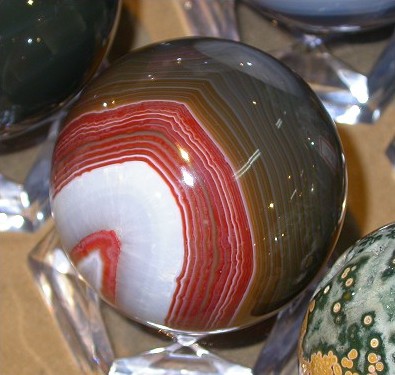
A Lake Superior agate ground into a sphere.
Photo by Fluorite


Of all the gems in the world agates are one of the most complicated even though they are formed from silica one of the most abundant compounds on earth.  According to Peter Heaney of Penn State University Agates are really complicated stuff whose composition has remained a mystery for many years.  It is only with the application of modern high-tech methods has the makeup of this really complicated mineral been understood.

Agate is composed of what is termed crypto-crystalline silica, or silicon dioxide (SiO2) that forms long thin fibers of silica that is more a polymer then a crystalline substance.  The real secret of forming an agate Heaney feels about how silica dissolves in water his research came from a need to discover how agate was being deposited in the pipes of geothermal power plants.  Silica kept coming out of solution and was clogging the plants with agate.  His problem was how to keep the dissolved silica from sticking to the insides of the pipes.  The question really was; how do you stop an agate from growing.
A slab of blue agate with a quartz crystal center.
Photo by Tomomarusan 
Because of a line of research I undertook on the formation of geopolymers that makes use of sodium silicate, sodium hydroxide and some sort of pozzalan material to form a similar compound to agates that is used as a green alternative to concrete.  This line of research gives me a useful insight on the formation of agates.  The hot water found deep in the earth contains a lot of dissolved silica that is brought to the surface naturally by hot springs and geysers.

Most agates are found in cavities in basalt or similar magma where it fills the cavities.  Other places where agate forms is in places where it replaces other minerals or fossils.  Petrified wood is one example in other cases it can be petrified bone or even coral as in Florida.   
One of the many forms agate rough can assume.
Photo by Rob Lavinsky

According to the theory an agate tarts with a cavity in a rock with the best being found in basalt. All volcanic rocks that get up to the surface where they harden contain a lot of water and carbon dioxide that will bubble up just like seltzer water. The rocks are full of holes similar to the pipes in the geothermal generating plant. In this case however it is these holes in the rock that fill with the silica solution that become agates. The silica bearing water does not all enter the cavity at the same time causing bands to be formed in the agate. Not only does the silica bearing solution form thee agate and also bears other minerals principally iron or manganese oxide that causes the different colors that are seen in the agate. These solutions percolate through the rock, and the minerals they contain begin to crystallize.
A Lake Superior agate note the banding.
Photo by Iowagateman.

By studying agates with transmission electron microscopy, and by x-ray diffraction and has been found that about 90% of an agate is quartz however there is another mineral and has the same composition but a different structure that is called mogenite. This mineral is more like carbon that can crystallize in either graphite or diamonds. 90% of an agate is quartz the remaining 10% is moganite that is an important factor in the formation of agates.

What an agate is examined under light microscope it displays a layer of fibers crystals that nucleated on the wall and radiate inward into the cavity just like the spokes of a bicycle wheel. Usually the first layer inside the cavity is a very fine material called chalcedony that is a mixture of quartz and moganite. Next in the sequence is a coarse band of quartz crystals that is pure quartz with no moganite.

One of the first questions asked about a maggot is why do we see these two different layers? They are both the same, silicon dioxide, but what is changing the crystal structure of them?

Another curious thing about agate fibers is they twist in growing a helical fashion.

To compound the mystery is the crystallographic direction in which the fibers grow with in bands that favors growing perpendicular to the normal growth direction.

Theoretically what happens is this that causes the characteristic banding seen in an agate with the colors coming from trace elements in the solution like iron and manganese. The agate itself is like a Russian doll having a hierarchical layering very similar to some kind of life form. This may be caused because chemically silicon is very similar to carbon.

Suppose the silica bearing water flowing into the cavity was only a little bit polymerized its precipitates onto the wall. If the concentration of silica gets high enough that polymerizes in short but repeat units of 5 to 10 molecules. It has been theorized that these polymerized molecules get pulled out of solution very quickly and become crystallized very rapidly. Because this happened so quickly any mistakes are made in the crystal structure causing weird minerals to form like moganite.

Under normal conditions all you will see are quartz crystals, but this is the process that proceed slowly. Many times this causes the center of the agate to appear as a geode line with quartz crystals and the rim of the cavity to be deposited as chalcedony. Although the deposits of moganite can proceed rapidly the quartz crystals themselves are deposited quite slowly. If one were to take a glass of water saturated with silica it would take two years before even the tiniest quartz crystals were deposited.

There are also channels that are located between the crystal fibers that work by attraction to pull water into the center of the cavity; thus you have a continuous supply of water feeding into the system that contains silica. The silica will polymerize again when it approaches saturation causing a layer of moganite to crystallize rapidly inside the cavity. This is quite an agate that has its banding pattern. However, this has not been proven experimentally.


One of the things we are certain of whatever is that agates form close to the surface of the earth at low pressures and temperatures where they are found in volcanic rocks, but also as replacements and many other environments. Agates are very resistant to erosion and are often found as just a roundish lump with a rough coating just laying on the surface of the ground waiting to be picked up, cut and polished that can be used in a piece of jewelry.

Monday, May 9, 2011

How a Pegmatite Works

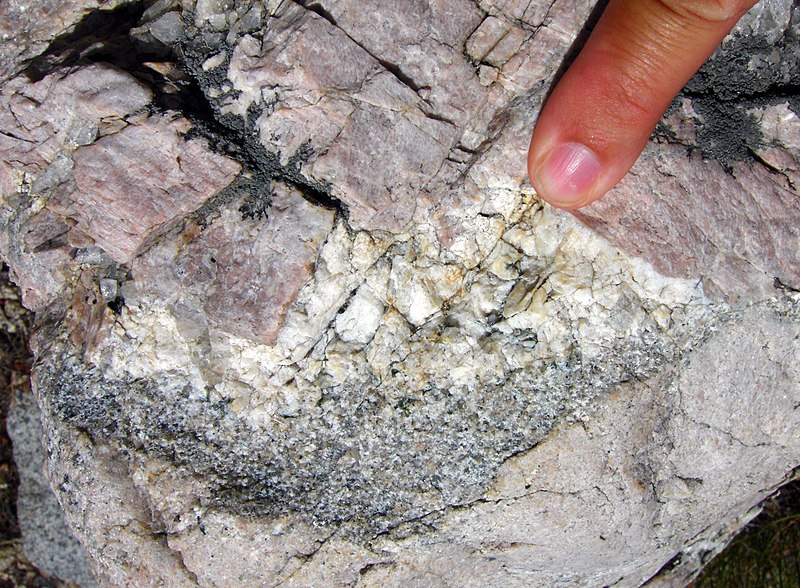
A pegmatite vein in a roadcut.
Photo by Woodlouper


The next several articles that are going to be published in this blog concern a very special type of rock formation that is called pegmatites. Another name that is sometimes used for this rock is giant granite because the large sized crystals of different minerals that are found in them. The most common minerals in a pegmatite are feldspar, mica and quartz with quartz in many pegmatites making up almost 50% of the total minerals present.

Although they are described as veins of pegmatite most of them are tabular shape masses of rock that are injected as a granitic magma into pre-existing cracks in the country rock, or sometimes they also form large ovals that are more or less deformed by earth movements that occur at the same time they are being deposited deep in the earth.

A pegmatite mine.
Photo by Pfuss


The crystals are found in a pegmatite are the result of very slow cooling that occurs in the depths of the earth's crust several miles beneath the surface. The pegmatites that are now exposed at the surface have all had several miles of rock eroded away so we can now see them at the surface.

Although most pegmatites are at home in gneiss or schist some of them are actually found in granite intrusions that have taken a long time to cool so that the pegmatite grades from granite. That only pertains to some of pegmatites, it is theorized that changes in the chemical composition can cause some pegmatites to be formed in a very short time; sometimes a matter of days and still have large sized crystals.

Closeup of a pegmatite
Photo by Mark A. Wilson


Unless a pegmatite is within a granitic intrusion they are all outliers of such an intrusion. The further a pegmatite is from the parent intrusion the more likely it is to have rare minerals in its composition. There are three main types of pegmatites of granitic composition and the fourth that is found in more mafic rocks such as gabbro. The further they are from the granitic or gabbro like intrusion the more apt they are to contain the proper chemical ingredients to form gemstones.

There are generally three major minerals and under the right conditions can form gemstones, they are beryl, topaz and tourmaline. There are also more than 100 other minerals that under the right conditions can also form gemstones. Sometimes even the body of the pegmatite itself is code is cabochons if it is especially attractive. Graphic granite that is found in some pegmatite makes especially attractive 

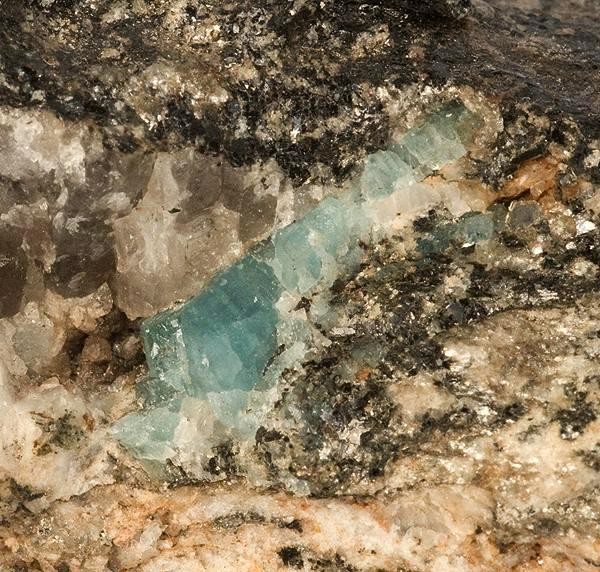
The rare mineral "bazzite" found in a pegmatite cavity. This is an analog of beryl containing the rare earth element scandium.
Photo by Rob Lavinsky 


Many pegmatites display different zones that are apt to contain different suites of minerals. The outer portion of a pegmatite displays very fine crystals and is often termed an aplite. There are several different shells that a pegmatite can display numbering up to seven. The inner core of all zoned pegmatites is usually quartz and in the inner core is where you usually find cavities that are filled with flawless crystals of various gemstones. Although it is unusual there are many instances where a single large cavity can produce several million dollars worth of gemstones.

Friday, April 29, 2011

Hunting Gems in a Pegmatite

A pegmatite is the host rock for many gemstones that are not found any where else along with a host of other rare minerals.  The stone itself is an intrusive igneous rock that chemically is the same as granite in fact one of its nicknames is “Giant Granite” because of its large sized crystals.  Most pegmatites are what are termed simple pegmatites composed of quarts, feldspar and mica that are composed of grains that exceed 2.5 centimeters in size. There are however some other classes of pegmatites that are known as “Dirty Pegmatites” that contain a host of other minerals contaminating them with one of then being the lithium minerals lepidolite, a form of lithium mica that is purple, and spodumene, lithium silicate.  It is in these pegmatites where most gemstones are found.

An "X" shaped cross of pegmatite in a darker colored gneiss.
Photo by Arlette 1


Most gemstones in a pegmatite are found in cavities that are formed inside the pegmatite where there is not a sufficient amount of material to completely close the inside of the vain leading an open space where clean crystals are formed. There are also other areas within the pegmatite where it is possible for gemstones to form the subsequent deposits usually cause these particular stones to be imperfect.

A set of rubbelite crystals from the Pala District of San Diego County, California.
Photo by Rob Lavinsky


Most of these pockets or vugs are found in association a particular rock texture called graphic granite where the vug is found to beneath a layer of graphic granite where the individual crystals displayed keep getting larger. Graphic granite resembles cuneiform writing like that used in ancient Babylon.

There are many different gemstones that are associated with pegmatites including: amblygonite, beryl, corundum, fluorite, topaz and tourmaline among others. Pegmatites are the home of many other exotic minerals that are not classified as gemstones, however some of these minerals are used for ores for lesser-known metals like beryllium, niobium and tantalum. 

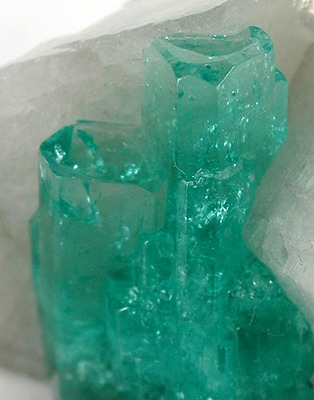
Beryl Crystals on dolomite.
Photo by Rob Lavinsky


Several years ago a roadbuilding contractor was working in Oxford County Maine when in the course of blasting a rough cut discovered a crystal of tantalite weighing several tons. Rather than just dumping it with the rest of the rock he sold the tantalite for a not-for-profit that it paid for the entire roadbuilding project. He simply pocketed the profit.

A crystal of tantalite in a pegmatite matrix.
Photo by Rob Lavinsky


Pegmatites are found all over the world wherever you have crystalline rocks. Some of the notable pigmented to the United States are found in the Appalachian Mountains, the Black Hills, the Rocky Mountains into the Pala district in San Diego County, California.

Sunday, January 23, 2011

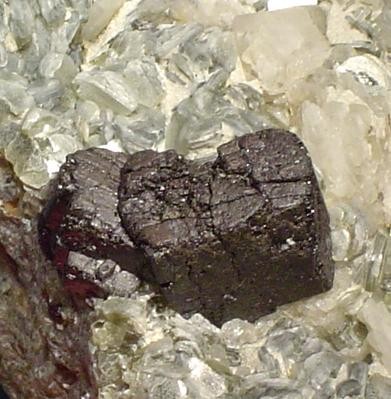
The King of Stones the Ruby

Rubies are a red colored form of corundum a form of aluminum oxide with the chemical formula of Al2O3.  This is the same mineral that produces sapphires that are found in blue and virtually every other color except red that color is reserved for the ruby only.

A ruby crystal on calcite.
Photo by Rob Lavinsky

To be a ruby the mineral corundum has to be colored pink to blood-red where the color is caused by a minute quantity of the element chromium.  The red color gives it its name “ruber” that is the Latin word for red making for an easy move to “ruby” in English.  In the trade ruby is considered one of the four precious stones the others are diamond, emerald and diamond.  Some people consider natural pearls to be the fifth precious stone although the owe their origin to natural processes produced by a living animal.

Hands down a good ruby exceeding 10 carets in weight is the most valuable of all gems.  Like any other gem the prices for rubies are mainly determined by their color, so that the most valuable stones are those that are bright red the so-called pigeon blood-red that commands a huge premium price when compared with any rubies having a similar quality.  The same as grading diamonds the next criteria for rubies is clarity where a clear stone will also command a premium.  However, a ruby containing needle like inclusions of the mineral rutile will often produce a star on a ground specimen that commands a high price as a star ruby.  Most rubies have been heat treated causing the rutile inclusions to vanish indicating that the stone has been treated.  The final quality that can determine a rubies price is cut and its weight in carets.  A recent price quoted for a ten caret pigeon blood-red stone was $24.000 per caret.  This meant the stone had a wholesale value of $240,000.
A cut pigeon blood ruby.

Rubies are most often found in suture zones, a good example is the ruby deposits found in the Mogok Valley of Myanmar where the rubies are found in an altered limestone that when it was laid down received a clay containment that was rich in alumina.  When the limestone was metamorphosed to marble the alumina that is aluminum oxide was converted into corundum.  The addition of a small amount of chromium ions caused the corundum to produce rubies.

Rubies are often a component of marble a good example of this is the occasional ruby crystal found in Franklin, New Jersey.  Sometimes marble undergoes further metamorphism into a rock called amphibolite that also can contain rubies as it does in a newly discovered deposit in southwest Greenland.  Although the stones in this deposit are small they make up for it by being almost perfect pigeon blood-red.

One of the necessary criteria for the formation of all rubies and sapphires it that they form in a rock that is starved of silica;  sometimes these stones are found associated with deposits of ultramafic rocks that is the apparent association where many rubies have been found in the gravel of the Cowee River in Franklin, North Carolina.

This is a place where the general public is invited to find their own rubies by washing, and separating the rubies from gravel.  Most of these stones are heavily contaminated with impurities, but many make some very fine gems.  Occasionally a stone is discovered that rivals the best stones produced in Myanmar.  Rubies are also found in several other parts of the world notably in Madagascar and Sri Lanka where they are found in gem bearing gravel.