Total Pageviews

Showing posts with label gemstones. Show all posts

Thursday, August 9, 2012

New Jersey Gemstones

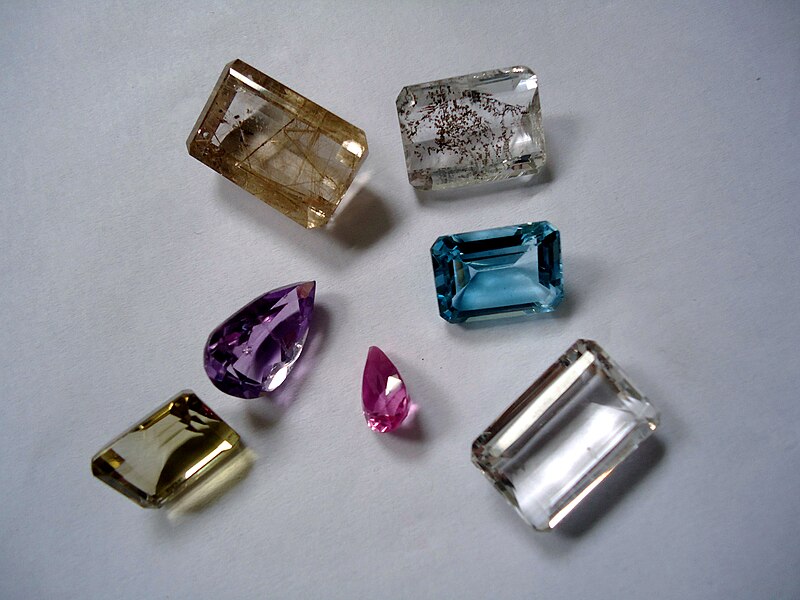
A variety of tumbled gemstones
Scanned by Adrian Pingstone


Amber that has been preserved since the age of dinosaurs is found in several places in New Jersey where there are Cretaceous rocks one of these places in the area around Sayreville although they can be found scattered throughout the Cretaceous rocks and various localities throughout southern New Jersey. Although there are several deposits of Cretaceous aged rocks in the United States Amber is only found with appreciable quantities in New Jersey.

Amethyst is found in the many trap ridges of New Jersey in both the area of the Palisades and in the Ramapo Mountains.  This variety of quartz is usually found in the cavities in the rock. Many other minerals of the zoisite family are also associated with traprock quarries.

In the past there was extensive zinc mining activity in Franklin and Sterling Hill in Ogdensburg that produced large quantities of zinc minerals.  The mine dumps in these areas are one of the most noted areas in the United States that have produced fluorescent minerals.  Some of these minerals are gemstones in their own right notably rhodonite and sphalerite.  In addition Sussex County is also known for producing other minerals including aragonite, corundum, garnet, pyrrhotite, rhodonite, spinel, tourmaline and williamsite.

Bergen County has produced amethyst, natrolite and opal that are found in the county’s trap ridges.

Mercer County has been known to produce albite, calcite, chabazite, datolite, natrolite, stilbite and tourmaline. Calcite, chabazite and datolite are produced from the trap ridges in the county.

In the far southern part of New Jersey can be found quartz crystals that are called by many Cape May diamonds although the source of these stones remains unknown it is thought they are washed down from some underwater formation further upstream in the Delaware River.  They are found on the beaches of Cape May and surrounding communities at the mouth of the river. The same area also produces jasper. 

Corundum has been found in Sussex County associated with the Franklin limestone as almost perfect crystals seen in cavities in the limestone.  These stones are blue, grey and red that in some places are clear enough to be cut into gems. 

Other counties where gemstones can be found include:

Middlesex - marcasite, petrified wood, pyrite

Morris - carnelian, serpentine

Passaic - agate, amethyst, carnelian, chabazite, datolite, heulandite, pectolite, prehnite

Sussex - aragonite, corundum, garnet, pyrrhotite, rhodonite, spinel, tourmaline, williamsite

Union - calcite, chalcedony, prehnite, sphalerlite

Warren - calcite, chalcedony, garnet, molybdenite, prehnite, serpentine, sphalerlite

Most of the collecting sites are located in Northern New Jersey.  Many of these sites are found at old mines or rockcuts.

Sunday, July 22, 2012

The Georgia Marvel and other would be gemstones


A large crystal of sapphire from Madagascar
Photo by Rob Lavinsky 


This was found in a stream in the Blue Ridge Mountains of Georgia in 1883 and was purported to be a sapphire worth $50,000 by its finder who was assured of its authenticity by two different southern jewelers.  This fabulous find was also known as the Blue Ridge Sapphire.  The jewelers had arrived at a value for the stone based on its weight of several carats.  Eventually this stone was proved to be a hunk of rolled blue-bottle glass that took coating it onto some platinum wire to convince its finder.

This is a glaring example of how little the average person knows about gems and it seems that fallacy more then truth is known by the general public.  One of these fallacies is the belief that any stone that can be scratched by a file has to be glass.  Another is that is when a stone is hit with a hammer it’s a fake.  These practices have led to the destruction of many valuable gems.

The United States has an abundance of all types of gemstones that has never been appreciated by the average person.  In many cases these gems have been produced as a byproduct of other mining operations where many of them have slipped through the operation to be lost.  Many of the stones that were saved were discovered in places where gold was being washed with the miners being attracted to a gem because it was a shiny pebble.

Gold washing was not limited to the western US, but was also practiced in the South starting in the early 1800 with the discovery of gold in North Carolina.  It is difficult today to appreciate the size and scope of these southern gold deposits that ran through the Piedmont and Blue Ridge Mountains.  In many cases the stream banks for miles were covered with mine tailings. 

The gold wasn’t limited to placer deposits, but many mines were also producing lode gold.  Many of these mines were destroyed during the Civil War.  Recently the Haile Mine in South Carolina was found to have reserves of gold exceeding 3,000,000 ounces.  A Canadian mining company is in the process of reopening this mine.

Another of these wonders was a stone weighing more then nine ounces that was discovered near Gibsonville, North Carolina that was deemed to be a real emerald by some local expert by some “local expert.”  A microscopic examination of this stone contained numerous small sparkles of light that were thought to be tiny diamond crystals.  This stone was eventually proved to be a quartz crystal having long hail-like crystals of hessonite and actinolite that also had a series of small bubbles in a stream-like pattern filled with liquid that sparkled in the light like diamonds.

In truth the United States has produced virtually all the precious and semi-precious stones in the world.  For the most part these stones remain in the ground through lack of interest of outright ignorance.  There is also a prevalent belief that gems come from some far-off romantic place that it is difficult to reach from here.   

Saturday, July 21, 2012

The easy way of Identifying your gemstones and minerals


Semi precious gemstones
Photo by Mauro Cateb


All gemstones are minerals, but not all minerals are gemstones, so the limited knowledge imparted here can be used on both gemstones and minerals.  If you can’t tell what kind of gems you own don’t feel bad because there have been plenty of emperors and kings that didn’t have a clue about what kind of stones they had in their own crown.  A good example of this is the Black Prince’s Ruby that resided in the Crown of England for hundreds of years before somebody found out it was really a mineral called “spinel.”  This is a stone that looks like a ruby but is a much less expensive stone then real ruby.  Clear white topaz is often mistaken for diamond and in the past many large diamonds have been found to be really topaz.  Identifying these stones is in the realm of the gemologist who is specially trained to identify gemstones.

A translucent ruby
Photo by Rob Lavinsky


There are several stones that are treated as gemstones, but aren’t.  Amber is a glaring example of this, a stone that is treated as a gem but in reality is fossilized tree sap having many inclusions of insects and other organic matter.  Petrified wood is another example that is often beautiful and is treated by many as a gemstone, but isn’t.  Jet, the black stone is actually a variety of coal and far from the definition of a gemstone, as are pearls.  Pearls have the distinction of being the most valuable stone, but they aren’t gemstones either.

Identifying gemstones and minerals is really a process of the elimination, for instance if you are presented with a green clear gemstone it is not apt to a ruby. More than likely it is emerald, but you really can't be sure without further tests. There is a variety of garnet called demantoid that is also green and is often mistaken for an emerald. One of the most important tests that are used in mineral identification is the color of the stone.

Hardness is another criterion that is used. This is based on the Moh’s hardness scale that ranges from 1 to 10 with diamond being the hardest and soapstone the softest. Most stones that are used in making jewelry are harder than seven on the Moh’s scale even though some stones that are as soft as three on the Moh’s scale are faceted for collectors. You can buy hardness testing kits or make your own from various minerals that work’s as good as store bought.

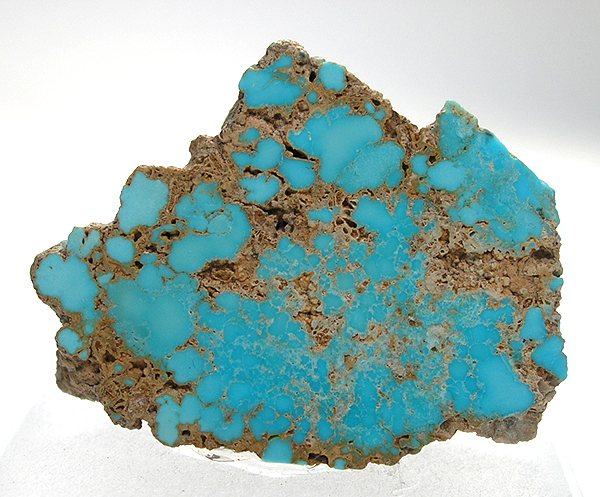
Turquoise from Mojave County, California
Photo by Rob Lavinsky


The looks of the stone are important is it transparent, translucent or opaque.  Transparent means can you see through the stone so things can be seen clearly that are behind the stone.  Translucent means does light pass through the stone, but you can’t make out objects that are in back of the stone.  Opaque means light doesn’t pass through the stone, and you can’t see through it.

Streak is literally a thin mark of the mineral or gemstone composed of very fine powder left on a piece of unglazed porcelain colored either black or white.  Black is often used to test for gold and other precious metals when it is known as a “Touchstone.”  It is often used in conjunction with acid to see if there is a reaction between the streak and the acid.  The karat weight of gold can be determined by treating its streak with various concentrations of nitric acid.

2x2 inch black and white streak plates,  White is pyrite and black is rhodochrosite


We sell streak plates: Click Here 

Cleavage and fracture are other important tests.  Fracture is most important for quartz gemstones that break in a Concoidal fracture that looks like little clam shells.  Some minerals like jade have a hackly fracture i.e. a rough appearance.  Some stones have a pronounced cleavage like topaz or diamond.  Topaz is especially prone to a perfect basal . cleavage causing it to be a poor gemstone.

Specific Gravity was discovered by Archimedes when he was tasked to find out if a gold smith cheated the Tyrant of Syracuse when he was making a golden crown for the tyrant.  This was a job that required quite a lot of forelock tugging on the part of Archimedes until he finally threw his hands up and decided to take a hot bath. His slave girl filled the bathtub to full of hot water so on Archimedes claimed into the tub it overflowed. He had discovered the principle of specific gravity, and with that he jumped out of the bathtub and went streaking through the town agora of Syracuse yelling at the passersby Eureka, Eureka that means I have found it, I have found it. They all thought he had gone nuts, and if it wasn't for the fact his brother-in-law was the tyrant he will probably been slapped in jail.

What Archimedes discovered was the body would displace an equal amount of water according to its volume, or in modern terms its weight per cubic centimeter. This is normally taken by first weighing the object in air and then weighing in water. The difference is its Specific Gravity.

These are some simple tests that can help with gemstone or mineral identification there are others that are far more complicated that can be used in conjunction with the simple tests. Although there are over 2000 recognized minerals in the world there are only about 300 that are common rock forming minerals that you are apt to encounter in the field. A good source of information about most minerals can be found at www.mindat.org

Saturday, June 25, 2011

Gemstone Occurrences in Vermont

Vermont is a beautiful state, but when Mother Nature was handing out gemstones she passed over Vermont handing out very few of these stones. Finding any quality gemstones in the state is more then a little like looking for a needle in a haystack.

The Vermont Gemstone is the grossular garnet that is found at Eden Mills from the Belvidere Mine.  This mine has produced some of the best specimens of this kind of garnet that have ever been found. 

There are no extensive pegmatite deposits in Vermont although beryl crystals are found with albite in Fairfax.  Beryl crystals are found penetrating the albite at this locality.  Lake Willoughby in Orleans County is one of the few places in Vermont that does have gem bearing pegmatites.

Blue Quartz is contained in the Precambrian gneiss found in road cuts along Rt. 9 east of Bennington as you are climbing out of the valley. Smoky quartz crystals are found in the vicinity of Lowell.

Corundum has been found on Granite Hill in Cuttingsville and Shrewsbury in Rutland County Vermont according to several authorities.

Jasper is found along the East Coast of Lake Champlain in the town of Colchester.  In this locality these is a ledge sticking up in the center of a farmer’s field of jasper.  It is also found as glacial float in some of the sand & gravel deposits in the area.

Some of the marble and metamorphosed Dolostone found in western Vermont in a strip extending for the length of the state affords some fine cutting material for cabochons.

Serpentine is found in several deposits along the eastern flank of the Green Mountains extending southwards from the Canadian Border to the Massachusetts Border.  Associated with the serpentine are deposits of asbestos, soapstone and talc.  One of the best places to find soapstone is in the town of Chester.

Gold is found in the rivers and streams that drain the eastern flank of the Green Mountains.  Throughout this area placer deposits of gold have been miner for generations, and although for the most part gold is sparse one lucky miner in the 1970s reportedly hit a pocket where he recovered $2,800 worth of gold in an afternoon.

Tuesday, June 14, 2011

Gem Bearing Cavities in Pegmatites

Cavities in rock.
Photo by Ustill


Just about any kind of rock can have cavities some pegmatites are particularly prone to this feature, and it is in these cavities that most gemstones are found. There are many causes of these cavities, but one of the most common is a gas bubble. In many pegmatites cavities can also be formed by a lack of sufficient magma to completely fill the space the pegmatite is occupying.

Cavities are found in pegmatites generally come from one source that is the lack of sufficient material to fill the pegmatites solid. Some of these cavities are quite small and are measured in millimeters. Larger ones are measured in centimeters, and still larger ones are measured in meters. The latter are the most uncommon form of cavity. When they are found in the process of gem mining they often become legendary containing several million dollars worth of gemstones.

Rubbilite tourmaline crystals found in a gem bearing cavity in pegmatite.
Photo by Rob Lavinsky


A cavity that has not been affected by Earth movements grows a fine crop of gem crystals that are attached to the matrix. These crystals are often covered with a fine layer of clay that forms from the last of the mineral bearing solution in the cavity. One might say from the leftovers. Less than one in ten of all the cavities that are found are of this variety. Originally these pegmatites were under considerable pressure as they were formed several miles beneath the surface of the earth. As they were brought up to the surface of the earth by the process of erosion they lost this initial pressurization through the process of a diffusion of their internal gases through the pores in the rock.

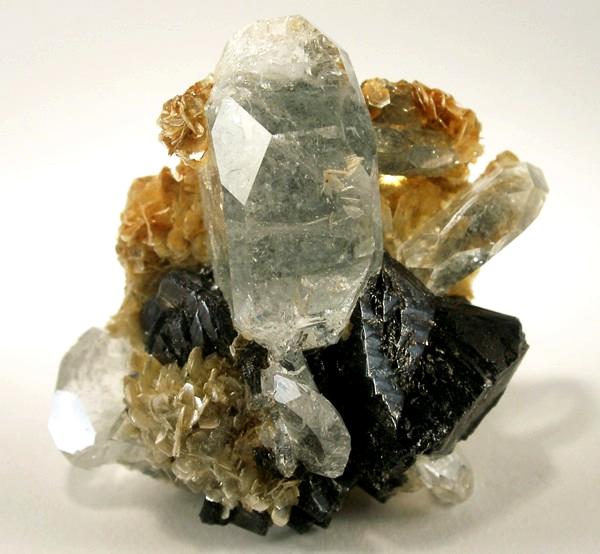
Beryl, Cassiterite and Muscovite from a pegmatite cavity.
Photo by Rob Lavinsky


It's the same cavity is fractured by Earth movements so that it loses its internal pressurization crystals that it contains are shattered, and the fragments fall to the bottom of the cavity. Another feature of this type of cavity that is now open for the atmosphere allowing it to be filled with clay that accumulates in the cavity from sources found on the surface of the earth.

Finally, some cavities that remains sealed from the atmosphere are visited by a later type of mineral bearing water that causes the gem crystals inside him to be etched away partially or wholly.

These cavities are known by many names including cavity, geode, pocket and vug.

Thursday, June 9, 2011

How most Colored Gems are Mined

Artesinal gem miners in Africa using traditional mining techniques.
Photo by Laura Latrigue 


Most people think that a mine is some kind of huge excavation in the ground or a series of deep tunnels that are served by the use of large equipment including 400 ton haul trucks to bring the ore to the mill. This is hardly the kind of mine describing most colored stone operations these are artisnal in nature and have hardly changed since biblical times.

The miners use as their primary tool a conical device that resembles a gold pan with a gently sloping bottom that ends in a point. The same device is also covered with small holes following easy entrance of water. This device has many names, but at least in one country where it is still used it is called the “Batik.”

An example of a rough lavender sapphire from an alluvial deposit.
Photo by Rob Lavinsky 


In use this device is filled with gem bearing gravel and then is pumped up and down in the water allowing heavier minerals to settle to the bottom of the batik. It is necessary to classify the minerals by size before being placed into the batik. Another common name for this device is the jig it because of that takes place while it is in use.

The mining takes place in the sand and gravel deposits found in association with some local stream. The gemstone deposits are usually found in close proximity to the bedrock even as gold is because most of the minerals that are classified as gemstones have a specific gravity ranging from 4 to 5 that the jigging action causes these stones to migrate to the bottom of the batik.

Sometimes the miners excavated to the gravel for 20 or more feet to reach the level of the richest deposits. Although gemstones are usually found in country that is underlain by a special type of gneiss containing the mineral cordierite like that found in the gem bearing areas of Madagascar and Sri Lanka. There is even a deposit of this special gneiss that is found in Connecticut in a narrow band extending northwards from Guilford. It is also found throughout areas that have been highly metamorphosed. It doesn't take this kind of rock to produce gemstones because they are like gold; they are where you find them.

In use once the batik has been jig up and down in the water long enough for the gemstones to settle to the bottom its top is covered with a plank and the batik is turned upside down on the plank so the gemstones are now all on top of the heap. They are then inspected for gemstones that are recovered, and the balance of the stones in the batik is discarded.

Using this method more than 50% of the colored stones that are in the jewelry trade are recovered using this method. You can make a pretty effective batik from a colander that you can buy in a kitchen supply store that is just about as effective as a batik. The most important thing that you can easily learn is what the various gemstone rough looks like.

In these times where gold is looked upon as a new measure of value it should be remembered that as far as concentrated wealth goes there is nothing that can beat gems for a very high value. Some of these gemstones are worth more than $20,000 per carat, and a caret only weighs 1/5 of a gram.

Sunday, May 22, 2011

The LCT Pegmatite and the Production of Gemstones

Beryl crystals on schorl from a vug in a pegmatite
Photo by Rob Laninsky


As can be seen from the list if gemstones found in pegmatites most of them come from LCT pegmatites.  The major components of these pegmatites beside the usual feldspar, quartz and mica are Lithium, Cesium and Tantalum hence LCT pegmatites.  The three primary pegmatites grade into each other according to depth and pressure.  The simple pegmatite is the closest to the body of intrusive granite having the highest pressure and temperature.  As the temperature and pressure decreases the simple pegmatite grades into the LCT pegmatite, and finally grades into a NYF pegmatite.  The NYF pegmatite contains the elements neodymium, yttrium and fluorine hence its name NYF.

The simple pegmatite does not contain miarolitic cavities usually, but as the pegmatite grades into the LCT phase the cavities become more prevalent, and in a NYF pegmatite they are quite common.  It is in these cavities where the gems form usually as flawless crystals under the right conditions.  It is estimated that only about 10% of these cavities produce flawless gems.  These cavities are usually termed “vugs” when they are inside a pegmatite.

Topaz crystal on quartz from a pegmatite
Photo by Rob Lavinsky


If the vug is cracked or broken by earth movements it will lose its pressure causing the crystals to shatter so they are found as fragments on the floor of the vug.  Another common feature of vugs is allowing more hydrothermal fluid to enter causing this additional fluid to etch the minerals present, and sometimes completely removing them.  A late stage in the formation of a vug is the production of clay that coats the crystals with a thin layer.  Unless the integrity of the vug has been breached this clay layer is composed of leftovers from the process of pegmatization. If the vug has been breached the clay is clay that has been washed into the pegmatite from surface sources.  In either case the clay is usually kaolin.

Red tourmaline crystals with quartz and lipidolite on calcite
Photo by Rob Lavinsky


Even though the gem forming minerals are located in vugs in the center zone of the pegmatite the same minerals forming the pegmatite are found locked within the body of the pegmatite in this case the stones contain so many imperfections and fractures to render them useless as gems for the most part.  These minerals can include many of those used as gems, but in this case they can be used as ores for several important metals such as lithium, cesium and niobium and tantalum.

Most of the LCT pegmatites display zoning with each zone carrying a specific suite of minerals.  Some of these pegmatites can have as many as seven different zones. The center zone is composed mainly of quartz, and is also the zone containing the vugs.

The gem containing vugs can range in size from a few centimeters to the size of a large room.  Some of these large vugs can contain several million dollars worth of gemstones as some of the monsters in the Pala district of southern California or the monster found by two hunters in Newry, Maine that yielded $8 million worth of gem grade tourmaline.  Other fabulous finds of pegmatite gems are found all over the world.  Some of the most prominent have been found recently in Afghanistan and Pakistan that have produced many valuable gemstones.  

Tuesday, May 17, 2011

A list of the Gemstones found in Pegmatites

Triphylite found in a cavity in pegmatite in Newry, Maine. This is a rare gemstone
Photo by Rob Lavinsky


The most common gemstones found in pegmatites are beryl, topaz and tourmaline according to the experts there are over 100 other minerals that are found in pegmatites that are used as gemstones. The following list is of some of the many other gemstones that are found in pegmatites. Finding all the gemstones listed here will probably keep you busy for the rest of your life.

The other gemstones found in pegmatites

Name              Color               Mineral           Abundance      Pegmatite Type

achroite            c                      tourmaline        rare                  LCT
albite                g                      feldspar            common           NYF & LCT
amazonite         g                      feldspar            common           NYF > LCT    
amblygonite      y – c                amblygonite      rare                  LCT
aquamarine       b-g                  beryl                 common           LCT
beryllonite         c, pl & y         beryllonite         very rare           LCT
brazilianite        y-g                  brazilianite         very rare           LCT
chrysoberyl       g – y               chrysoberyl        very rare           LCT
danburite          c, y                  danburite            rare                  LCT
elbaite              c, p, g, b           tourmaline         common           LCT
euclase             b – g                euclase               very rare           LCT
fluoapatite         b, p, pur, g      apatite                common           NYF < LCT
goshenite          c                      beryl                  common           NYF < LCT    
hambergite        c, pl, y             hambergite        very rare           NYF & LCT
heliodor            y                      beryl                  rare                  NYF & LCT
hiddenite           g – y                 spodumene       very rare           LCT
hydroxlherderite  c, pl, y, b       hydroxyl “         very rare           LCT
indicolite           bl                     tourmaline         common           LCT
jeremejevite      b                      jeremejevite        very rare          LCT
kunzite              p                      beryl                   rare                 LCT
lazulite              b                      lazulite                rare                 LCT
lepidolite           pur – p             mica                 common           LCT
liddicoatite        p – r                 tourmaline        very rare           LCT
londonite          y – c                 londonite          very rare           LCT
manganotantalite  r                    m-tantalite        very rare           LCT
microlite           y, c-br              microlite            rare                  LCT
montebrasite     c, pl, p-y          montebrasite      rare                  LCT
morganite         p – o                beryl                  rare                  LCT
oligoclase         c                      plagioclase        common           NYF & LCT
petalite             c                      petalite               rare                  LCT
pezzottaite        r                       beryl                 very rare           LCT
phenakite          c, p, y               phenekite          rare                  LCT
pollucite            c                      Pollucite           rare                  LCT
quartz               c, p, sm, pur     quartz               common          NYF & LCT
rhodozite          y-c                   rhodozite          very rare           LCT
rossmanite        p-r, c, g            tourmaline        very rare           LCT
rubelite p-c                               tourmailine       very rare           LCT
sanidine            y, c                   feldspar           common           LCT
simpsonite        y, o                  simpsonite        very rare           LCT
spessertine        o                      garnet               common           LCT
spodumene       c-g                   spodumene       common           LCT
stibiotantalite     y                     stibiotantalite     very rare          LCT
topaz                b-c-p                topaz                 common          NYF & LCT
triplite               r, br, p             triplite               common          NYF
triphyllite           b-g                 triphyllite           rare                  LCT
verdelite           g                      tourmaline         rare                  LCT
zircon               c, p, br, g         zircon                common          NYF & LCT

Abbreviations: c, colorless; g, green; y, yellow; b, blue; p, pink; r, red; o, orange;
br, brown; pur, purple; sm, smokey; pl, pale.

After V.B. Simmons Gem bearing Pegmatites in Geology of Gem Deposits, Editor Lee A. Groat, Yukon Geological Survey

This list is incomplete, but they are always finding new minerals in pegmatites and some of them are gemstones. Some of them are so rare that only one example is known. The hunt goes on!

Monday, May 9, 2011

How a Pegmatite Works

A pegmatite vein in a roadcut.
Photo by Woodlouper


The next several articles that are going to be published in this blog concern a very special type of rock formation that is called pegmatites. Another name that is sometimes used for this rock is giant granite because the large sized crystals of different minerals that are found in them. The most common minerals in a pegmatite are feldspar, mica and quartz with quartz in many pegmatites making up almost 50% of the total minerals present.

Although they are described as veins of pegmatite most of them are tabular shape masses of rock that are injected as a granitic magma into pre-existing cracks in the country rock, or sometimes they also form large ovals that are more or less deformed by earth movements that occur at the same time they are being deposited deep in the earth.

A pegmatite mine.
Photo by Pfuss


The crystals are found in a pegmatite are the result of very slow cooling that occurs in the depths of the earth's crust several miles beneath the surface. The pegmatites that are now exposed at the surface have all had several miles of rock eroded away so we can now see them at the surface.

Although most pegmatites are at home in gneiss or schist some of them are actually found in granite intrusions that have taken a long time to cool so that the pegmatite grades from granite. That only pertains to some of pegmatites, it is theorized that changes in the chemical composition can cause some pegmatites to be formed in a very short time; sometimes a matter of days and still have large sized crystals.

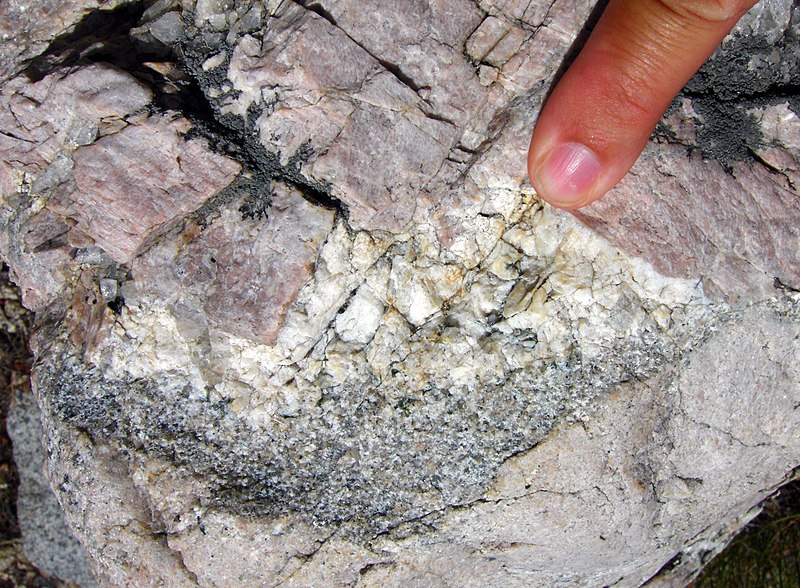
Closeup of a pegmatite
Photo by Mark A. Wilson


Unless a pegmatite is within a granitic intrusion they are all outliers of such an intrusion. The further a pegmatite is from the parent intrusion the more likely it is to have rare minerals in its composition. There are three main types of pegmatites of granitic composition and the fourth that is found in more mafic rocks such as gabbro. The further they are from the granitic or gabbro like intrusion the more apt they are to contain the proper chemical ingredients to form gemstones.

There are generally three major minerals and under the right conditions can form gemstones, they are beryl, topaz and tourmaline. There are also more than 100 other minerals that under the right conditions can also form gemstones. Sometimes even the body of the pegmatite itself is code is cabochons if it is especially attractive. Graphic granite that is found in some pegmatite makes especially attractive 

The rare mineral "bazzite" found in a pegmatite cavity. This is an analog of beryl containing the rare earth element scandium.
Photo by Rob Lavinsky 


Many pegmatites display different zones that are apt to contain different suites of minerals. The outer portion of a pegmatite displays very fine crystals and is often termed an aplite. There are several different shells that a pegmatite can display numbering up to seven. The inner core of all zoned pegmatites is usually quartz and in the inner core is where you usually find cavities that are filled with flawless crystals of various gemstones. Although it is unusual there are many instances where a single large cavity can produce several million dollars worth of gemstones.

Saturday, April 30, 2011

Finding Gemstones and Minerals in a Pegmatite

The inside of a pegmatite mine, Ruggles Mine in New Hampshire
Photo by Squelle


Pegmatites are mined not so much for their exotic minerals, but the more mundane feldspar, mica and quartz. The exotic minerals that include gemstones are usually a byproduct of this mining. This is true of most pegmatite mines except for a few like the Maryall mine in Connecticut, and the Himalaya mine in San Diego County California. Because pegmatite it is a very hard rock it is almost impossible to mine without the use of blasting is for this reason the average rockhound is usually excluded. However, from prior mining activities it is possible to go over the mine tailings looking for specimens.

Most miners are more interested in the three primary minerals of feldspar, mica and quartz than they are in the more exotic minerals; therefore these minerals are often thrown onto the waste pile where they remain for the rockhounds to collect later. It is among these tailings where most of the gemstones are found.

By working tailing heaps you are working with stone that has already been mined, and broken up making for much easier collecting. Most of the time you'll encounter stones that are not much more than a foot in diameter, and many of them are usually smaller. You will occasionally encounter a larger stone where it is extremely handy to have in your collection of tools a fairly large sledgehammer weighing more than 8 pounds. Most collecting on a tailings heap can be done with a sledgehammer that weighs 8 pounds, and you can do a considerable amount of damage with an eight pound hammer.

For most collecting in a pegmatite one of the most useless things is a regular geologist’s pick because most of them are too light. What is far more effective is a 4 pound engineer’s hammer and a bullpoint. Bullpoints are a hardened steel rod about three quarters of an inch in diameter having a hexagonal shape about a foot long and coming to a hardened point on one end..

Some of the other things you need in your tool kit for collecting specimens in a pegmatite is a good jeweler's loup is at least 8X magnification on a chain so you can wear around your neck. A stone chisel is another device that should be included. Your kit should also include some old newspapers to wrap your specimens. A small pad and pencil to write down descriptions of the specimens you have found. You should also leave a number on the newspaper holding the specimen so you'll know what it is when you get home.

Friday, April 29, 2011

Hunting Gems in a Pegmatite

A pegmatite is the host rock for many gemstones that are not found any where else along with a host of other rare minerals.  The stone itself is an intrusive igneous rock that chemically is the same as granite in fact one of its nicknames is “Giant Granite” because of its large sized crystals.  Most pegmatites are what are termed simple pegmatites composed of quarts, feldspar and mica that are composed of grains that exceed 2.5 centimeters in size. There are however some other classes of pegmatites that are known as “Dirty Pegmatites” that contain a host of other minerals contaminating them with one of then being the lithium minerals lepidolite, a form of lithium mica that is purple, and spodumene, lithium silicate.  It is in these pegmatites where most gemstones are found.

An "X" shaped cross of pegmatite in a darker colored gneiss.
Photo by Arlette 1


Most gemstones in a pegmatite are found in cavities that are formed inside the pegmatite where there is not a sufficient amount of material to completely close the inside of the vain leading an open space where clean crystals are formed. There are also other areas within the pegmatite where it is possible for gemstones to form the subsequent deposits usually cause these particular stones to be imperfect.

A set of rubbelite crystals from the Pala District of San Diego County, California.
Photo by Rob Lavinsky


Most of these pockets or vugs are found in association a particular rock texture called graphic granite where the vug is found to beneath a layer of graphic granite where the individual crystals displayed keep getting larger. Graphic granite resembles cuneiform writing like that used in ancient Babylon.

There are many different gemstones that are associated with pegmatites including: amblygonite, beryl, corundum, fluorite, topaz and tourmaline among others. Pegmatites are the home of many other exotic minerals that are not classified as gemstones, however some of these minerals are used for ores for lesser-known metals like beryllium, niobium and tantalum. 

Beryl Crystals on dolomite.
Photo by Rob Lavinsky


Several years ago a roadbuilding contractor was working in Oxford County Maine when in the course of blasting a rough cut discovered a crystal of tantalite weighing several tons. Rather than just dumping it with the rest of the rock he sold the tantalite for a not-for-profit that it paid for the entire roadbuilding project. He simply pocketed the profit.

A crystal of tantalite in a pegmatite matrix.
Photo by Rob Lavinsky


Pegmatites are found all over the world wherever you have crystalline rocks. Some of the notable pigmented to the United States are found in the Appalachian Mountains, the Black Hills, the Rocky Mountains into the Pala district in San Diego County, California.

Wednesday, January 19, 2011

What is a Gemstone?

A gemstone or gem is also called by several other names such as precious or semi-precious stones or even jewels. These stones when cut and polished are used to make jewelry or other adornments used for decorations on the human body. Most gemstones are minerals but there are certain rocks such as lapis lazuli that are rocks. Other gemstones are made of organic matter such as amber, jet, coral or pearls even though they are not minerals they are still used in the manufacture of jewelry. Because of this use they are still considered to be gemstones. For the most part gemstones are usually hard, but occasionally some soft materials find their way into jewelry because of certain characteristics that are found attractive. In the past gemstones were also used to create major luxury art forms. The carvings made by the Russian lapidariest Carl Faberge were the last significant works that were made during the 19th century of this type.

A collection of uncut gemstones.
In the West the traditional classification of gemstones goes back to the ancient Greeks. This classification was split between the precious and semi precious stones; this distinction was also made in many cultures around the world.

In our modern world these are the stones that are considered precious diamond, ruby, sapphire and emerald. Some experts include the natural pearl on this list. The list of precious stones is not particularly scientific it rather tells of the rarity of these stones during ancient times. There are many stones that have as high a value as the so-called precious stones that are only considered to be semi precious. An outstanding example of this is the Alexanderite a variety of crysoberyl the changes from red to green tea pending on the type of light it is exposed too.

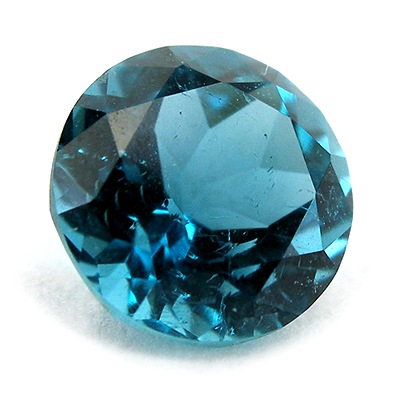
A faceted blue tourmaline
Most of these gemstones grade from transparent to translucent displaying fine color when they are pure and with no inclusions, and are very hard. The diamond is the hardest of all with a hardness on the Mohs scale of 10. Generally to be an acceptable gemstone asset have a hardness of at least 8 on the Mohs scale. A slight amount of tolerance however is allowed for some gems as soft as 5 on the Mohs scale to be used in jewelry providing it is not exposed to wear such as an approach or pendant.

The words precious or semi precious used in the context of commercial gemstones is often misleading because it implies certain gemstones are intrinsically more valuable than others when it is just not true.