Total Pageviews

Showing posts with label amethyst. Show all posts

Thursday, August 9, 2012

New Jersey Gemstones

A variety of tumbled gemstones
Scanned by Adrian Pingstone


Amber that has been preserved since the age of dinosaurs is found in several places in New Jersey where there are Cretaceous rocks one of these places in the area around Sayreville although they can be found scattered throughout the Cretaceous rocks and various localities throughout southern New Jersey. Although there are several deposits of Cretaceous aged rocks in the United States Amber is only found with appreciable quantities in New Jersey.

Amethyst is found in the many trap ridges of New Jersey in both the area of the Palisades and in the Ramapo Mountains.  This variety of quartz is usually found in the cavities in the rock. Many other minerals of the zoisite family are also associated with traprock quarries.

In the past there was extensive zinc mining activity in Franklin and Sterling Hill in Ogdensburg that produced large quantities of zinc minerals.  The mine dumps in these areas are one of the most noted areas in the United States that have produced fluorescent minerals.  Some of these minerals are gemstones in their own right notably rhodonite and sphalerite.  In addition Sussex County is also known for producing other minerals including aragonite, corundum, garnet, pyrrhotite, rhodonite, spinel, tourmaline and williamsite.

Bergen County has produced amethyst, natrolite and opal that are found in the county’s trap ridges.

Mercer County has been known to produce albite, calcite, chabazite, datolite, natrolite, stilbite and tourmaline. Calcite, chabazite and datolite are produced from the trap ridges in the county.

In the far southern part of New Jersey can be found quartz crystals that are called by many Cape May diamonds although the source of these stones remains unknown it is thought they are washed down from some underwater formation further upstream in the Delaware River.  They are found on the beaches of Cape May and surrounding communities at the mouth of the river. The same area also produces jasper. 

Corundum has been found in Sussex County associated with the Franklin limestone as almost perfect crystals seen in cavities in the limestone.  These stones are blue, grey and red that in some places are clear enough to be cut into gems. 

Other counties where gemstones can be found include:

Middlesex - marcasite, petrified wood, pyrite

Morris - carnelian, serpentine

Passaic - agate, amethyst, carnelian, chabazite, datolite, heulandite, pectolite, prehnite

Sussex - aragonite, corundum, garnet, pyrrhotite, rhodonite, spinel, tourmaline, williamsite

Union - calcite, chalcedony, prehnite, sphalerlite

Warren - calcite, chalcedony, garnet, molybdenite, prehnite, serpentine, sphalerlite

Most of the collecting sites are located in Northern New Jersey.  Many of these sites are found at old mines or rockcuts.

Friday, February 17, 2012

The Royal Purple Stone Amethyst


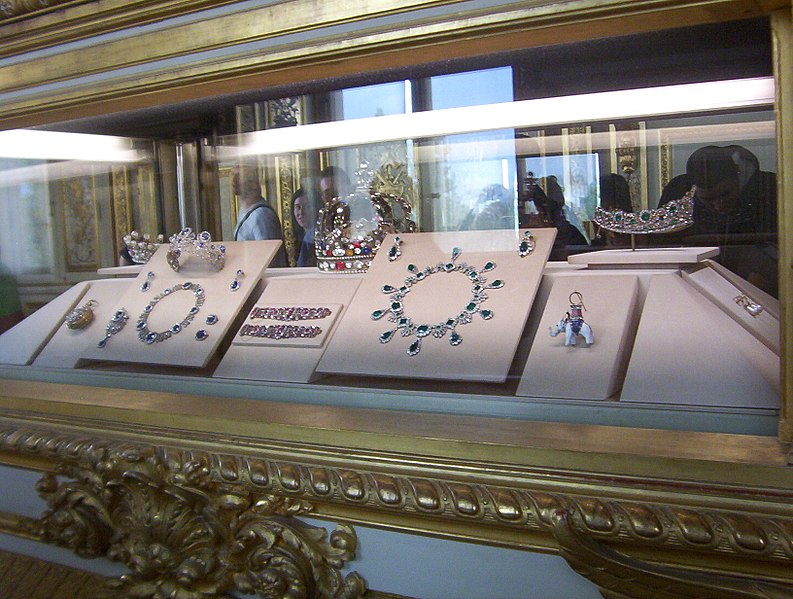
At one time the amethyst was considered to be a precious stone and was even found among the crown jewels of France. This particular stone came from the basalt outcrops along the Bay of Fundy near Parsboro, Nova Scotia.

The French Crown Jewels that are kept in the Louvre


Amethyst is a form of quartz that has a hardness of seven making it suitable for jewelry and when cut it takes a very high polish.

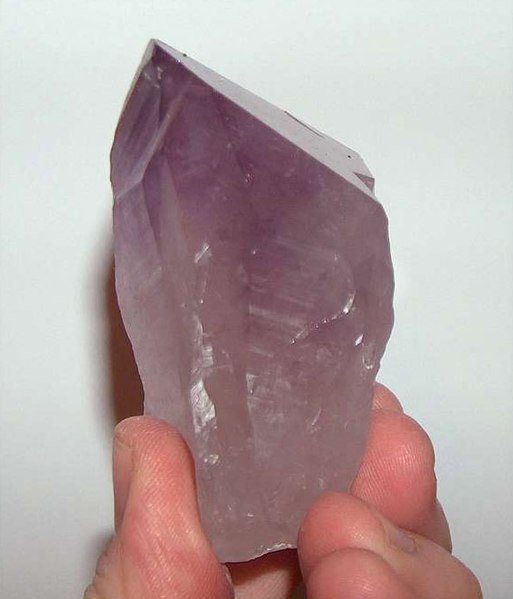
An amethyst crystal from Brazil


Among the many forms of crystals that it takes is one special type called scepter crystals that form with a narrow bottom that widens at the top.

A scepter crystal of amethyst.


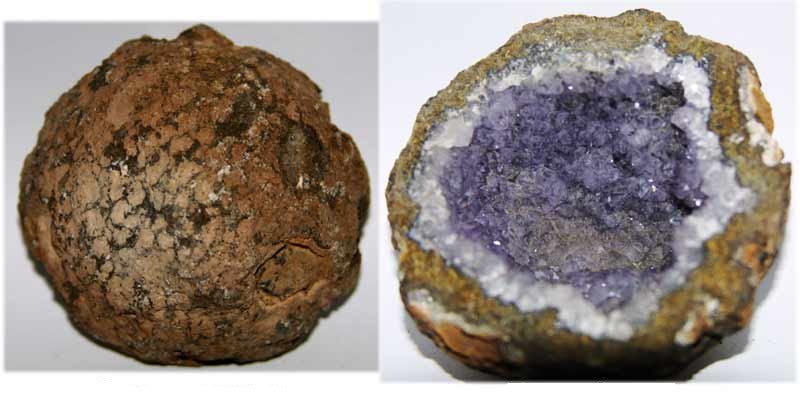
A common form for amethyst to take is the lining of the geode. The best place in the world to find these amethyst geodes is in the basalt flows of Uruguay that formed as bubbles in the basalt as it was cooling.

An amethyst filled geode from Uruguay.  In this case the crystals form a druse inside a bubble formed in basalt.  Note the green iron staining in the outside of the geode.  The geodes are eroded from the basalt flow and are found lying on the soil.
Photo by Didier Descouens


At other times it is just found cavity.     

This is a druse of amethyst found in a small geode.


When amethyst is cut the stone was usually faceted one of forms it takes is an emerald cut although there are many other types of faceted stones that it can take.

An emerald cut amethyst


Some amethyst is cut in the intaglio style something like a cameo only the surface of the stone has the design incised.

An intaglio cut amethyst.


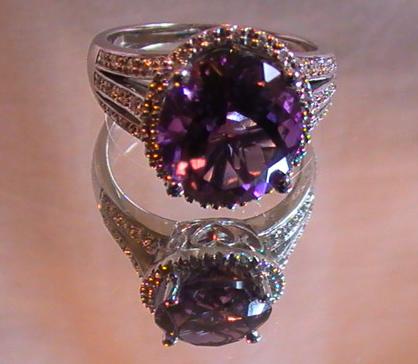
For centuries amethyst is then used in jewelry as a faceted stone or en cabochon. It

A ring with an amethyst stone.


Sometimes amethyst if the crystal is large enough is carved in the statues. The Chinese are particularly adept at this artform.

an antique vase made in the 1600s containing many different stones including amethyst.

Photos from Wikimedia Commons

Thursday, January 5, 2012

Gemstone Occurrences in New Jersey


A ruby crystal from Tanzania similar to those found in New Jersey.


Like many of the states of the Northeast New Jersey contains some of the best localities for finding gems in the Eastern United States.  Agate is found throughout the traprock quarries of the state as well as quartz gemstones including amethyst that occurs as cavities in the stone.  Many marine fossils are also found in the state including many fossils of shark teeth. Most of these fossils are found in the Kirkwood formation (Eocene and Miocene) in Monmouth County.

One of the most interesting stones found in the state are so-called Cape May Diamonds that in reality are waterworn quartz crystals that are found on the beaches of Cape May Point along the Delaware River in southern New Jersey.  These stones are the most abundant at Higbee and Sunset beaches in Cape May.  These stones can range in size from the finest sand to one whopper that weighed 3 pounds 14 ounces that is known as the Cape May Diamond that was found in New Castle, Delaware in 1866.

Rubies are rarely found in the white marble at the mining district in Franklin where they are found associated with the zinc mines in Franklin and Sparta.  Many of these stones are small, but are well formed.  The rubies fluoresces red, but the marble matrix doesn’t. Many minerals found on the mine dumps around the area are various minerals of zinc that also fluoresce in brilliant colors under a fluorescent light with some of them even considered gemstones.  Another mineral that is found associated with the zinc minerals is rhodonite a silicate of manganese that is often cut as cabochons.

Bloodstone or heliotrope is found in sparing amounts in the Eastern United States north from Florida with exposures in New Jersey.  This is a member of the quartz family of gemstones that is dark green in color with bright red spots of hematite.  This stone is often cut and used in inexpensive jewelry.
A polished slab of petrified wood.
Photo by Daniel Schwen

In addition to agate the traprock quarries in Passaic County also contain many zeolite minerals as well as datolite and prehnite in large quantities. In many places the traprock quarries have cavities lined with amethyst crystals.  In some areas in eastern New Jersey you can find jasper and petrified wood.

In recent years one of the most valuable gems in North America has been overlooked by collectors is the freshwater pearl found in many of the mollusks in the states many rivers.  The pearl was looked avidly for in the 19th Century, but for a period of inactivity caused by over fishing the mollusks  caused this industry to decline.   

Friday, June 17, 2011

Gemstone Occurrences in Maine

An example of carving grade tourmaline from the Dunton Quarry strike in Newry Maine.
Photo by Rob Lavinsky


There are many gemstones found in the pegmatites of Oxford County in western Maine including beryl, topaz and tourmaline, Maine’s state gemstone.  This is almost enough to make you cry, one writer describes the destruction of 225,000 carets of chrysoberyl in a blast in a pegmatite near Paris, Maine, the same writer also describes twinned crystals of this mineral weighing up to 120,000 carets that have come from the same locality.

The oldest gem mine in the United States is located on Mt. Mica an LCT Class of pegmatite in Paris the same quarry is also the second oldest known deposit of elbaite in the United States after its initial discovery at the Clarks Ledge Quarry in Chesterfield, Massachusetts. Elbaite is another name for colored tourmaline.  The Mt. Mica deposit has several other firsts including the discovery of the first rose quartz in the world.

Morganite beryl another gemstone found in Maine
Photo by Gery Parent


In the fall of 1972 a monstrous tourmaline pocket was found in the Dunton Quarry of Newry on a spur of Plumbago Mountain.  This pocket is legendary in the annals of gem mining as it yielded more then $8,000,000 worth of gem and specimen quality tourmaline.  The haul was so large the discoverers had to buy an abandoned bank building in Mexico where they stored the gem grade tourmaline in the bank vault and the specimen grade in the basement.

So important are the pegmatites of western Maine that there is a weeklong event held at the Poland Mining Camps called the Maine Pegmatite Workshop every year for the past ten years. In 2011 the workshop started on May 28. Further information about the Pegmatite Workshop can be found on their webpage.

A crystal of clear topaz
Photo by Rob Lavinsky


Tourmaline isn’t the only gemstone found in Maine there are many others.  One of these was the deposits of amethyst that came from Deer Hill in Stow that is now closed to the public.  Here the amethyst came from three quarries the Deer Hill Mine, the Nevel Mine and the Intergalactic (Eastman Ledge) Mine.  The Intergalactic Mining Company is presently mining for blue aquamarine crystals.  Aquamarine is another gemstone that is often found with tourmaline in pegmatites.

Topaz is another gemstone found in Maine with the deposits of Stoneham containing the only sizable crystals in the state.  This is a stone that is often confused with clear quartz, but glistens more when struck by sunlight.  Clear and smoky quartz crystals often accompany topaz in the states many pegmatites.  Transparent smoky quartz is often called smoky topaz or Spanish topaz if it has been heated assuming a yellowish tint.

A Maine amethyst point from Deer Hill in Stow
Photo by Rob Lavinsky


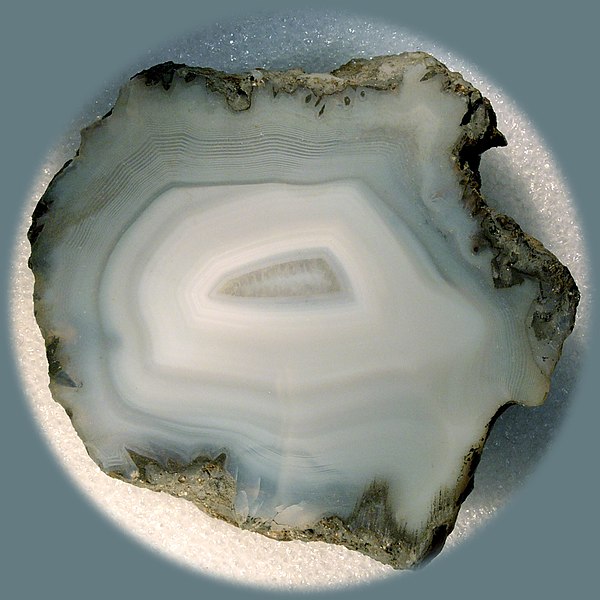
Along the banks of the St. Croix River in Perry one can find agates that have weathered from the basalt flows that are also along the river.  These basalt flows also contain native copper that was observed by the author on a collecting trip to Perry in the 1960s.  Agates are hard to see unless they have been wet by water that really makes them stand out.  The deposit also contains chalcedony and jasper.

An agate like those found at Perry along the St. Croix River
Photo by Hannes Grobe


Jasper can also be found on Jasper Beach in the district of Machias that is called Starboard along the coast right below the radar station.  The beach here is a shingle beach of rhyolite with some jasper mixed with the rhyolite stones.

There have been reports of black jade coming from the river that flows through Farmington.  If this is true it is one of the few reports of jade on the east coast.  The link for the Farmington locality also contains an extensive list of Maine minerals and their localities.

Literally there are hundreds of localities in Maine where gemstones can be found the best advice is to buy a book about the many collecting localities in the state from one of the local rock shops.