Total Pageviews

Thursday, November 24, 2011

How Diamonds are Formed

This shows the Earth's mantle where diamonds are formed.
Courtesy of the Debeers Group.


A vast amount of knowledge has been developed since the 1980s about how diamonds were formed.  It has been through the inclusions found in diamonds that much of the information about how they were formed and their origin was discovered,  Inclusions are all natural materials that are found in diamonds including some that are gaseous, liquid and solid inclusions.  Although theoretically it is possible to form diamonds by squeezing a lump of coal in nature that hasn’t happened although in the lab this had been done under conditions of extreme heat and pressure in giant hydraulic presses,

Some of the diamonds that have been found in meteorites that are more then 4.25 billion years old far exceeding the age of life on Earth.  However natural diamonds on earth were formed at least 990 million years ago.  One of the discoveries made since the 1980s shows that diamond is formed whenever you burn acetylene gas that forms as a coating on metal that has been exposed to burning acetylene that is often deposited during the course of oxy-acetylene welding.  This type of diamond coating has since been made use of industrially for imparting a hard coating onto metals.

How a diamond bearing pipe is formed.
Courtesy of the Debeers Group 


It takes extreme pressure that ranges from 40 to 50 thousand times higher then the pressure found at the earth’s surface of 14,7 pounds or 1,000 millimeters that is termed one bar.  This is the pressure encountered at depths ranging from 125 to 200 kilometers below the surface   Most diamonds are formed from kerogene that was deposited in vast quantities on earth during its formation.  There are other diamonds that were formed from carbonaceous material like fossil coral or shells that have been subducted deep into the earth’s crust where they were also exposed to extreme heat and pressure.  A few diamonds were even formed at depths ranging from 300 to 400 kilometers deep or even further, but these diamonds are extremely rare.  Most diamonds were formed at temperatures that exceeded 9000 to 1,300o Celsius.

Formation and Emplacement of a Kimberlite Pipe

At about 125 kilometers beneath the surface of the earth the pressure of the magma cracks the surrounding rock until the cracks reach the earth’s surface.  Much of this cracking is due to contained carbon dioxide in the magma that causes the magma to bubble and expand.  This is caused either by heat from below or reduced pressure as the magma column reaches towards the surface.  It is this expansion that eventually causes the magma to erupt explosively at the surface.

An eruption like this has never been observed by mankind because it has been millions of years since one occurred on earth predating mankind.  It has been theorized that an eruption of this type rather then being hot like most volcanic eruptions are; it is emplaced under freezing temperatures because of the rapid expansion of the volcanic gases.  In the final few kilometers these gases rise at the speed of sound where they form a pipe following the path of least resistance through the surrounding rock finally reaching the surface.

It is because of this rapid ascent of magma that allows the diamonds to reach the surface of the earth rather then being converted into graphite a far more stable substance at the earth’s surface.  The pressure him pardoned by dissolved gases in the magma eject the diamonds they don't have time to be degraded into graphite.  The diamonds are actually xenoliths, particles caught up in the magma train as foreign objects.  Once the volcanic cone cools it starts too erode releasing the diamonds into the soil. The diamonds that are not eroded state trapped in a kimberlite or lamproite where they are mined.

Different Types of Diamond Deposits

How diamonds are mined.
Courtesy of the Debeers Group.


Diamonds are found in two different types of deposits of which primary deposits come first.  These are deposits found in kimberlite, lamproite or komatiitef pipes and are mined lake any other mineral found in hard rock.  Secondary diamonds are found in river gravel deposits where they are concentrated after traveling for some distance from their primary source.  The gravel found in the Orange River in South Africa is an important source of diamonds.

Often overlooked by many is a third source of diamonds found in a rock type called conglomerate that are really fossilized river gravel.  One important formation like this is found near Marathon, Ontario that not only carries diamonds, but rubies and sapphires as well..

Monday, September 12, 2011

Appalachian Diamonds

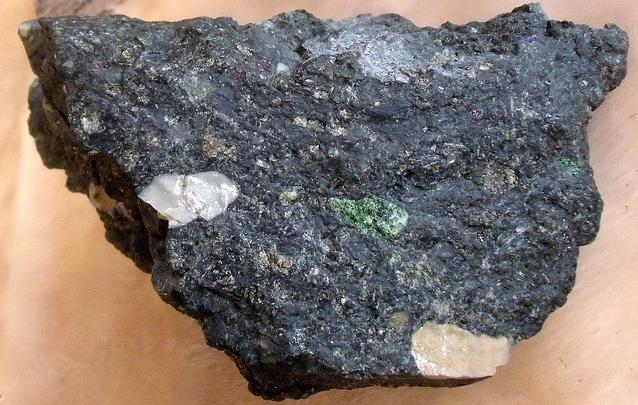
A diamond crystal in matrix
Photo by Rob Lavinsky


Look out, alluvial diamonds have been found scattered along the backbone of the Appalachians for years making it likely that sometime in the future a lucky prospector is likely to find a kimberlite or lamproite the two types of rock where diamonds are apt to be formed.  Diamonds have been found in Virginia, West Virginia, North and South Carolina, eastern Kentucky and Tennessee, Georgia and Alabama.  All of these states are below the area that was affected by the continental glaciers of the past million years making it likely that their host rocks are in place.

At the time of its discovery in April 1928 the famous “Punch” Jones at 34.43 carets was the second largest diamond ever found in the United States.  The Uncle Sam diamond was found in 1924 at Murfreesboro Arkansas in the Prairie Pipe Mine weighing at the time of its discovery 40.23 carets is the largest diamond ever found in North America.  The Punch Jones diamond is presumed to have washed Rich Creek from neighboring Virginia.   There are five sites in or near to Virginia where diamonds have been found one in kimberlite and one in peridotite; it is presumed all of these diamonds came from similar rock types.

Brilliant Cut Diamonds


North Carolina produced 13 diamonds in the mid-1800s.  The North Carolina Geological Survey has recently undertaken studies of lamproites in the Charlotte area to better understand where these diamonds originated and to discover clues as to their origin for other exploration projects in the Piedmont.  The other Southern States produced one or two additional diamonds.  The lack of glaciation in all these states suggests a local origin for theses diamonds.  Lamproites and kimberlites have been discovered in the immediate areas where most of these diamonds have been found, but none have been found since WW II when gold mining operations ceased in the southern Appalachians.

Resumption of placer mining operations make the discovery of diamonds likely.  Most of the diamonds discovered in the past were from placer mines with a few exceptions.  The Punch Jones diamond is one of these exceptions it was discovered when Punch Jones and his father were playing horseshoes.  Although this diamond was discovered in 1928 it took until 1942 before its true identity was established.

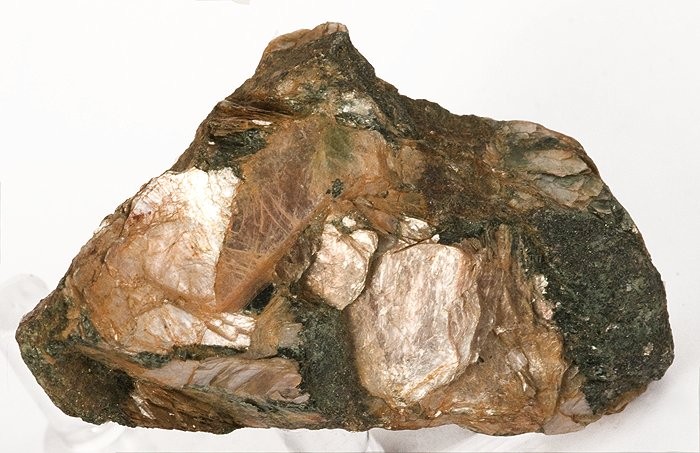
Fortunately diamonds have some distinct minerals associated with them making it possible to find diamond deposits by tracing the diamonds and other associated minerals to their source.  These minerals include type “G” pyrope garnets, chrome diopside, phlogophite mica and serpentine.  The mineral illmanite is frequently found associated with diamonds too.  Tracing these minerals is often done with soil samples taken below the “A” horizon that contains organic matter.  

Saturday, September 3, 2011

Gemstone Occurrences in New York:


Herkimer Diamonds from the Ace of Diamonds Mine.
Photo by Rob Lavinsky


You could almost write a book just about gemstone occurrences in Manhattan that has produced beryl, chrysoberyl and some huge garnets.  These are all gems that have been produced from excavations and the rock removed from them.  Most of this rock now resides along the bank of the Hudson River in uptown Manhattan where you can readily get at the excavation spoils from Inwood Park.  The entire southeast part of the mainland has the same kind of gemstones as Connecticut with whom it shares a common border.

Saratoga County has produced beryl and rose quartz from the pegmatites found in the Adirondacks.  Almandine garnets have been produced from a deposit on Gore Mountain in the town of North Creek..  These garnets are embedded in a matrix of gabbro with some of the crystals reaching more then a meter in diameter.  The Barton Mining Company produces the garnets for making abrasives, but sufficient amounts of cuttable material is produced to satisfy the needs of the Rock Hound trade.

In the middle of a city park in Syracuse is a kimberlite pipe that may be diamondiferous or not depending upon who is telling you about it.  This is a swarm of pipes that extend from a coal mine in Pennsylvania to the Monteregian Hills of Quebec. Many of these kimberlite dikes are clustered around Ithaca, but the narrow swarm of kimberlites can be found crossing the state from the Pennsylvania border to Ogdensburg on the St. Lawrence River. None of the NY kimberlites are known to contain diamonds.  Diamonds have been found in the glacial deposits that were brought down from the diamond deposits of Ontario.

Kimberlite
Photo by Sub Arctic Mike


The original discovery of a kimberlite dike in New York occurred in Syracuse in 1837, but was mistaken for serpentine; it wasn’t until 1887 that rocks of this nature were properly identified at Kimberly South Africa that their true nature was discovered.  The kimberlite dikes in New York although they don’t contain diamonds because the magma came from too close to the surface of the earth do contain some other minerals that are considered gemstones providing they are large enough including olivine and spinel.

An interesting deposit of rubies and sapphires are found in the marble deposits of Orange County.  The quantity of stones that have been found in sparse, but the deposit extends into Sussex County New Jersey. These gems were found somewhere between Monroe and Southfield in Orange County. According to the report these gems were less then two carets in weight, and the deposit was sparse. This was a deposit that was worked secretly by two people for some years who took its locality to the grave with them.

When the zinc mine at Edwards was being actively mined they discovered a mass of lazulite weighing more then twenty pounds in the process of mining zinc ore.  This mass was cut up into cabochons and made into jewelry.  Lazulite is one of the components of the semi-precious stone lapis lazuli. 

A stone that is readily identified with New York State is quartz whether it is in the form of amethyst in the trap ridges along the Hudson River in the Haverstraw vicinity, at the old lead mine in Ellenville or in the Little Falls formation crossing the state from west to east where it ends at diamond cliff in Hague on Lake George.  This is the home of the world famous Herkimer Diamond that in reality is a doubly terminated quartz crystal found in cavities in the silicified dolomite of the Little Falls formation.  Various varieties of quartz (silica) gemstones are found throughout New York.  Albany County is noted for its flint and jasper that is found in sand and gravel deposits.  There was even a flint deposit overlooking the Hudson Valley that was worked by the Indians in prehistoric times for flint to make their weapons.

Saturday, July 30, 2011

Gemstone Occurrences in Connecticut

Almandine garnet, Connecticut's state stone.
Photo by Rob Lavinsky


Connecticut is amply endowed with gemstones ranging from andalusite to zircons.  The stones found in Connecticut are found in a variety of terranes although the primary one is pegmatites, but they are also found in the trap ridges of the Connecticut River Valley.  Even more are found as glacial float if you want to use that method of finding gems.

Just in the town where I live, Barkhamsted there are several different verities of gemstones including almandine garnets, beryl, corundum, kyanite, quartz, soapstone, zircon and the usual rock forming minerals.

Connecticut is blessed with many gem bearing pegmatites one series starts in Glastonbury and Crosses the Connecticut River at Middletown and extends almost to the coast of Long Island Sound.  The other belt of pegmatites extends diagonally across the western portion of the state from Hartland to Ridgefield.  Both of these belts contain many of the gemstones found in LCT type pegmatites.  Many of them are Dana localities and one of them, the Maryall Mine is considered to be one of the most important gemstone mines in the United States.  This mine is famous worldwide for its crystals of aquamarine and golden beryl.  It also contains some bright red garnets that can weigh up to several pounds.

Beryl crystals on Feldspar.
Photo by Rob Lavinsky


The trap ridges of the Connecticut River Valley and in Woodbury contain specimens of amethyst, datolite and prehnite that are found in vugs in the trap rock.  Some of these occurrences are also Dana localities. Many of them are also world famous.  Connecticut has over 600 recognized mines that are now abandoned scattered mainly across the western half of the state, but there is still plenty of gems to be found in eastern Connecticut.

Microlite-Elbalite and Lepidolite found in the pegmatites of Connecticut.
Photo by Rob Lavinsky
The beaches in eastern Connecticut are littered with moonstones that have eroded from the granite eastern Connecticut is known for.  Another stop you should make is the Connecticut Mining Museum that is part of the Sloan-Stanley Museum in Kent where many of the minerals found in Connecticut are displayed along with lots of information about the mining industry that used to be found in the state.  According to many authorities modern mining was developed in Connecticut then spread out all over the world.

Friday, July 29, 2011

Gemstone Occurrences in Rhode Island

This is an amethyst scepter like those found at Diamond Hill
Photo by Rob Lavinsky


There is a greenish mica schist found in Warwick that has embedded in it red almandine garnets. In East Warwick you can find purple almandine garnets embedded in a silvery mica schist. Jamestown has staurolite crystals embedded in phyllite. Garnet-staurolite bearing schist can also be found under the Jamestown Bridge,

A discovery of beryl was recently reported in the magazine Rock and Gem on the western side of Narragansett Bay in the vicinity of the Jamestown Bridge in the pegmatites found in the area. It was also found at the end of the Cliffwalk in Newport.  The largest crystal found in Newport was about 6 cm in length and 1 cm in diameter along with several other smaller specimens.

There have been moonstones reported on the beaches of Rhode Island that continue into eastern Connecticut.  One of the beaches in Rhode Island is actually called Moonstone Beach.

The state stone is bowenite a variety of serpentine of the sub variety antigorite that has often been classified as a semi-precious stone that is cut into polished slabs or cabochons.  The Maoris of New Zealand have also used bowenite to make axes.  This stone is associated with limestone and was originally found in Lincoln.

Amethyst has been from several localities in Rhode Island notably however from Diamond Hill in Ashaway, Hopkinton in Washington County.  This mineral is accompanied by several other varieties of quarts.  At times the amethyst from this locality is found as rare scepter specimens.

A variety of Jasper veined with chalcedony is found in several localities in Cumberland, Providence County.  Chalcedony has also been found at the Conklin Quarry in Lincoln and another locality is Diamond Hill in Ashaway.  

Sunday, June 26, 2011

Gemstone Occurrences in Massachusetts

This is rhodonite of the type found in the Betts Mine it is also the state gem of Massachusetts
Photo by Phillipe Giabbanelli


Massachusetts is another state that is sparsely supplied with gemstones although there are some exceptions one of which is the Betts Mine in West Cummington that produced some very fine rhodonite for years.  The rhodonite accompanied by rhodochrosite is respectively manganese silicate and carbonate both are cut as gems.  Rhodonite is also the state gem of Massachusetts. 

Rhodonite was first discovered as float from the glacier during the 19th century where the American Gem Company part of Tiffany & Co., became aware of the float.  They used the rhodonite for making knife and umbrella handles as well as dinnerware.  There is a place setting on display in the American Museum of Natural History in New York City made from rhodonite from Massachusetts.  The deposit that is at the contact between the Hawley and Savoy schists was developed by Anson Betts who mined the rhodonite for use as flux on welding rods and later mined it as a gemstone.  The mine was bulldozed shut after the death of Anson Betts and is now closed to collecting.  Rhodonite is still available from the site in the form of mine tailings where it is still collected.

Down the road from the rhodonite deposit to the east is the small village of Lithia in the town of Goshen where the mineral called spodumene was mined in the late 1800s.  This is an area of LCT pegmatites where the first colored tourmaline was discovered in a quarry in the town of Chesterfield in the early 1800s.  Goshen is the Dana type locality for the variety of beryl termed “Goshenite.” a colorless variety of beryl.  The same pegmatites also produce blue tourmaline, petalite and pollucite a cesium aluminum silicate mineral. Beryl has also been found in a pegmatite at Royalston in Worcester  County.

This is margarite a rare form of mica on emery from the mines at Chester, MA.  Emery is the black mineral that the margarite is hosted upon.  Margarite is a brittle form of aluminum rich mica associated with emery deposits.
Photo by Rob Lavinsky


The Chester Abrasives Co. in Chester used to produce emery from the mines west of Chester in about the area where the power lines cross US RT. 20 in a series of mines running north to south for a total of five mines.  In the historical society of Chester there are four apothecary jars containing several pounds of ruby and sapphire crystals that were actually mined in the Cowee Valley corundum mines in Franklin NC operated by the Chester Abrasive Co. in the late 1900s.  Although not mined in Chester they are at least worth a good look.  There is an exposure of gem grade serpentine on the Middlefield Rd. on the right just as you are climbing out of the Westfield River Valley.

The Connecticut Valley offers a completely different suite of gemstones.  The first place to look is in the gravels of the lower Deerfield River because it contains agates that have washed from the nearby trap ridges.  The trap ridges themselves offer good deposits of amethyst and zeolites.  Lanes Quarry in Westfield is the Dana Locality for datolite, however Lanes Quarry is closed to collectors as it is an active quarry.

Datolite from Lanes Quarry in Westfield
Photo by Rob Lavinsky


Garnets are found throughout the state wherever there are crystalline rocks although many of them are rotated making them useless as gemstones.  Most of them are almandine garnets although in the Betts Mine that contains the manganese minerals rhodonite and rhodochrosite there are a rare variety of orange colored garnets called spessartine that are gemmy and suitable for faceting.  Many of these garnets tend to be small, but there are some exceptions weighing several carets.

Spessartine garnets of the type found at the Betts Mine in Plainfield MA where they occur with quartz.
Photo by Rob Lavinsky


A good source about rocks and gems in the state can be found at the many gem and mineral stores dotting the landscape.  Most of these stores stock guidebooks that give specific localities for collection, and many of them are up-to-date,

Saturday, June 25, 2011

Gemstone Occurrences in Vermont

Grossular Garnet found at Eden Mills Vermont is the State Gemstone.
Photo by Rob Lavinsky


Vermont is a beautiful state, but when Mother Nature was handing out gemstones she passed over Vermont handing out very few of these stones. Finding any quality gemstones in the state is more then a little like looking for a needle in a haystack.

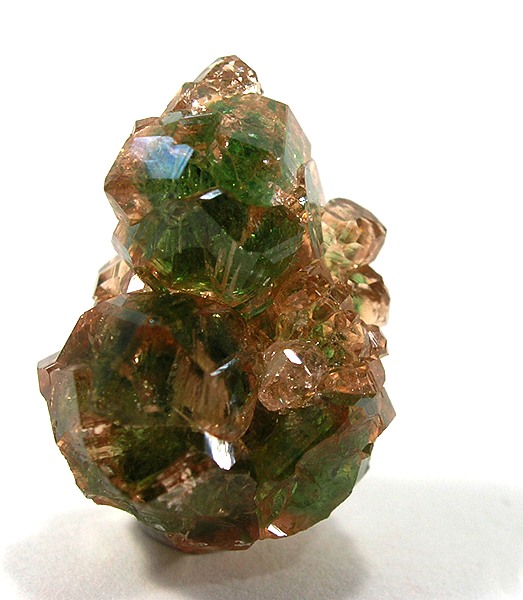
The Vermont Gemstone is the grossular garnet that is found at Eden Mills from the Belvidere Mine.  This mine has produced some of the best specimens of this kind of garnet that have ever been found. 

There are no extensive pegmatite deposits in Vermont although beryl crystals are found with albite in Fairfax.  Beryl crystals are found penetrating the albite at this locality.  Lake Willoughby in Orleans County is one of the few places in Vermont that does have gem bearing pegmatites.

Blue Quartz is contained in the Precambrian gneiss found in road cuts along Rt. 9 east of Bennington as you are climbing out of the valley. Smoky quartz crystals are found in the vicinity of Lowell.

Corundum has been found on Granite Hill in Cuttingsville and Shrewsbury in Rutland County Vermont according to several authorities.

Jasper is found along the East Coast of Lake Champlain in the town of Colchester.  In this locality these is a ledge sticking up in the center of a farmer’s field of jasper.  It is also found as glacial float in some of the sand & gravel deposits in the area.

Some of the marble and metamorphosed Dolostone found in western Vermont in a strip extending for the length of the state affords some fine cutting material for cabochons.

Serpentine is found in several deposits along the eastern flank of the Green Mountains extending southwards from the Canadian Border to the Massachusetts Border.  Associated with the serpentine are deposits of asbestos, soapstone and talc.  One of the best places to find soapstone is in the town of Chester.

Gold is found in the rivers and streams that drain the eastern flank of the Green Mountains.  Throughout this area placer deposits of gold have been miner for generations, and although for the most part gold is sparse one lucky miner in the 1970s reportedly hit a pocket where he recovered $2,800 worth of gold in an afternoon.