Total Pageviews

Sunday, May 15, 2011

The Different Types of Pegmatites

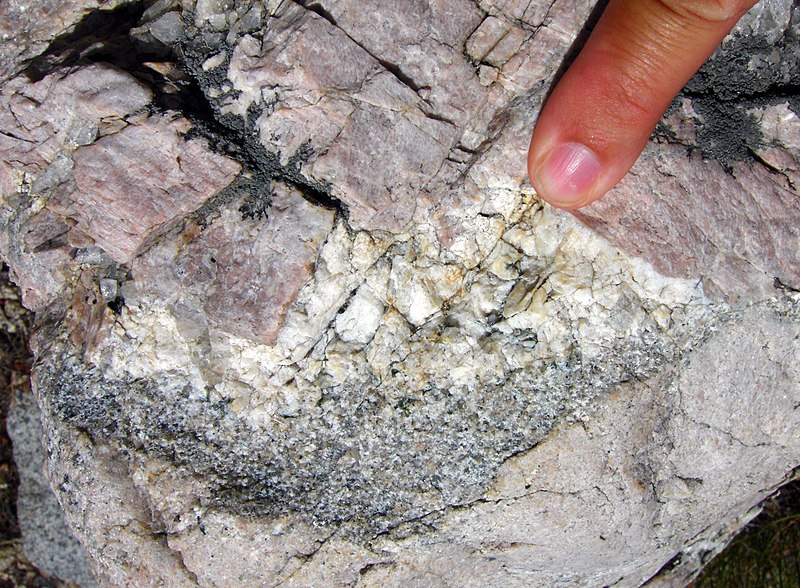
Pegmatite in mica schist.
Photo by Arlette


If we seem to be staying on the subject of pegmatites it is because they are very important in the production of gemstones. There are over 100 different types of gems that are produced from pegmatites. Most of these pegmatites are chemically the same as granite, and the term actually refers to their texture rather than their composition. There are three recognized varieties of granitic pegmatite, and one that is recognized in gabbro. All pegmatites containing crystals that are larger than 2 cm in diameter and can reach truly gigantic proportions. There is a feldspar mine in the Ural Mountains of Russia that has been producing feldspar from any single crystal for many years.

Pegmatites were classified in the mid-20th century by Buddington with a depth zone classification of granitic rocks in 1959. Cerny’s revision of 1991 is the most commonly when used today for the classification of pegmatites. Basically these classifications are based on the depth at which pegmatites were emplaced, metamorphic grade as well as minor element content. Under this classification Abyssal pegmatites are the highest grade that have been in place that either high or low pressure. Muscovite grade pegmatites were emplaced in high-pressure, but a lower temperature. Rare element pegmatites were emplaced at even lower pressures and temperature. In this classification the miarolitic pegmatites having large cavities were emplaced at shallow depths. The most gemstones are found in the miarolitic pegmatites within the enclosed cavities.

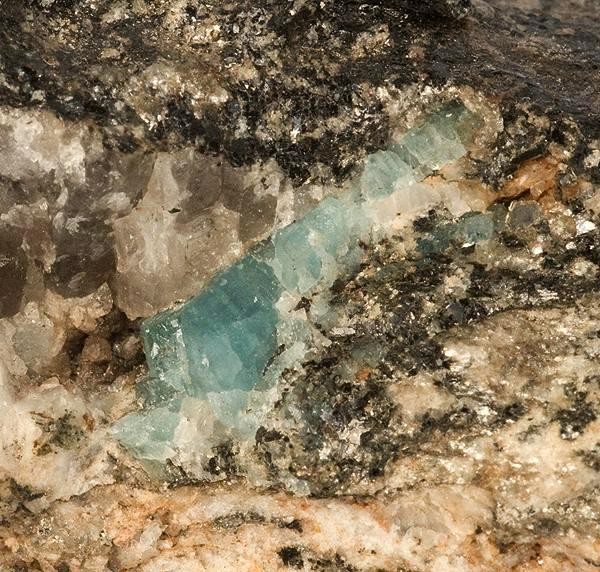
Beryl with microcline found in a pegmatite cavity.
Photo by Rob Lavinsky


The simple pegmatite is composed of feldspar, quartz and lesser amounts of muscovite mica. This is the simplest type of pegmatite that is found that can range from tiny veins a few millimeters wide to great masses of pegmatite that can cover several acres, and be meters wide. For the most part simple pegmatites have a very uniform composition, and little variance in the size of the crystals from one side to the other. Approximately 80% of all pegmatites found in nature are of this type. There are very few gemstones found in the simple pegmatites. Most of them contain white colored feldspar and milky quartz with sometimes bands of muscovite mica parallel to the sides of the vein. Under the above classification this type of pegmatite would fall under the classification of being an abyssal pegmatite.

Red tourmaline on lepidolite and quartz from a pegmatite cavity.
Photo by Rob Lavinsky


The rare element class of pegmatites is further divided into the sub classifications LCT and NYF. LCT pegmatites contain lithium, cesium and tantalum. NYf stands for a niobium, yttrium and fluorine. These are perhaps the rarest types of pegmatite. Most of the gemstones bearing pegmatites are of the LCT variety. The closer they form to the surface the more apt they are to have miarolitic cavities containing gemstones.

Monday, May 9, 2011

How a Pegmatite Works

A pegmatite vein in a roadcut.
Photo by Woodlouper


The next several articles that are going to be published in this blog concern a very special type of rock formation that is called pegmatites. Another name that is sometimes used for this rock is giant granite because the large sized crystals of different minerals that are found in them. The most common minerals in a pegmatite are feldspar, mica and quartz with quartz in many pegmatites making up almost 50% of the total minerals present.

Although they are described as veins of pegmatite most of them are tabular shape masses of rock that are injected as a granitic magma into pre-existing cracks in the country rock, or sometimes they also form large ovals that are more or less deformed by earth movements that occur at the same time they are being deposited deep in the earth.

A pegmatite mine.
Photo by Pfuss


The crystals are found in a pegmatite are the result of very slow cooling that occurs in the depths of the earth's crust several miles beneath the surface. The pegmatites that are now exposed at the surface have all had several miles of rock eroded away so we can now see them at the surface.

Although most pegmatites are at home in gneiss or schist some of them are actually found in granite intrusions that have taken a long time to cool so that the pegmatite grades from granite. That only pertains to some of pegmatites, it is theorized that changes in the chemical composition can cause some pegmatites to be formed in a very short time; sometimes a matter of days and still have large sized crystals.

Closeup of a pegmatite
Photo by Mark A. Wilson


Unless a pegmatite is within a granitic intrusion they are all outliers of such an intrusion. The further a pegmatite is from the parent intrusion the more likely it is to have rare minerals in its composition. There are three main types of pegmatites of granitic composition and the fourth that is found in more mafic rocks such as gabbro. The further they are from the granitic or gabbro like intrusion the more apt they are to contain the proper chemical ingredients to form gemstones.

There are generally three major minerals and under the right conditions can form gemstones, they are beryl, topaz and tourmaline. There are also more than 100 other minerals that under the right conditions can also form gemstones. Sometimes even the body of the pegmatite itself is code is cabochons if it is especially attractive. Graphic granite that is found in some pegmatite makes especially attractive 

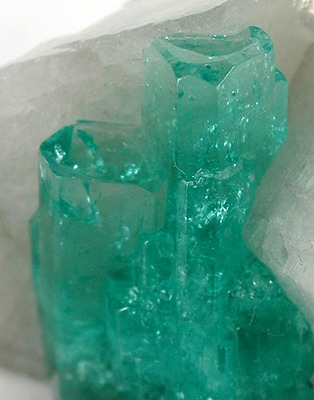
The rare mineral "bazzite" found in a pegmatite cavity. This is an analog of beryl containing the rare earth element scandium.
Photo by Rob Lavinsky 


Many pegmatites display different zones that are apt to contain different suites of minerals. The outer portion of a pegmatite displays very fine crystals and is often termed an aplite. There are several different shells that a pegmatite can display numbering up to seven. The inner core of all zoned pegmatites is usually quartz and in the inner core is where you usually find cavities that are filled with flawless crystals of various gemstones. Although it is unusual there are many instances where a single large cavity can produce several million dollars worth of gemstones.

Saturday, May 7, 2011

The Tools of the Trade for Rockhounding by Raymond A. Kukkee, Prospector

Kakabeka Falls Ontario a Rockhound's paradise
Photo by Hans Jurgen-Hubner


Raymond Kukkee has been a hard-rock prospector in Northern Ontario for over thirty years, and the following article is built on his experiences while prospecting.  What he has to say about the tools needed to be a prospector is just as valid for Rockhounding. 

What you should take with you on a prospecting outing is always a good question. It's always better to have something and NOT need it, than to be 60 miles out on the trail wishing you did bring it along.
    
 Here's a list of what I usually take along on my day trips.  Remember I 'm going out in my truck and might be  dragging  a 4WD Quad along to save the feet too!

Even for a 2 hour walking trip, I take most of  the following tools and other helpful items,  but once out in the field  at times,  I may leave some  items  in the truck, depending on the outing:


•    A jeweler's loupe,  I use a 25x triplet
•    Topographic  and geology maps of area to be explored
•    Prospector's license*
•    Pad and pencils. Take extra pencils, they get lost easily. A compact  waterproof paper notebook is handy
•    A compass  (liquid-filled, good quality)  I use a Silva  or Brunton surveying type  c/w signaling mirror
•    A GPS unit capable of mapping,  projecting and tracking way points.    My present GPS is a Garmin GPSmap76CX, which is reliable and runs for a couple of days on 2 AA batteries.
•    Safety glasses for bashing rocks.  We only have ONE set of eyes so take care of them!
•     A compact first aid kit
•    A belt-carried hunting knife -6"   and / or a multi-tool type belt knife
•    A prospecting "pick" hammer. (In this area we have a special tool called a "Tweedie" tool named after Ron Tweedie, the inventor and maker.  It is a 36" short-handled   hammer with a 3" flat blade opposite that can be used both  for whacking rocks and grubbing, to remove moss/dirt for stripping.  (In prospecting that is convenient, it saves you bringing along a wide pick.)   At times it might be the only hammer you carry.
•    A sharp cold chisel  ½" x 12" long
•    A 4-lb short- steel- handled  "crack hammer"  unbreakable (Estwing) for serious sample removal.
•    Some paper to wrap special delicate specimens
•    Plastic sample bags 6-10  mil  8x14"  are good,  but  you can use recycled plastic bags of any type. I take along heavy recycled 1-liter plastic milk bags when available.*
•    A red or orange wax pencil for marking stakes or posts.
•    Fluorescent flagging tape to mark sample locations
•    A black marker to write ON the flagging tape
•    A short-handled ox-head axe--for cutting claim posts.   If cutting claim lines, I also  take along a
•    Swedish brush axe which is the bow design.
•    A folding shovel for the back pack, and a long-handled shovel for the truck.
•    A very compact emergency 3"x4"x 2"fishing outfit, a few hooks, line, sinkers, and a small lure.   Maybe a small collapsible fishing rod!
•    Wide-brimmed floppy hat that will cover the ears.
•    Full face mosquito net that fits over the floppy hat for extreme insect conditions.
•    Fly dope.   Various types, it must work on blackflies, mosquitoes, and deer flies.  But is generally USELESS for those tiny noseeum sandflies in hot weather
•    Extra socks to keep the feet dry.
•    Heavy boots that have high ankle protection. Waterproof boots are best
•    Rain gear--lightweight rubber but full body coverage including a hood--or the  Gortex type
•    Long-legged pants,  NOT shorts.
•    Long-sleeved shirt and jacket
•    Leather gloves, or good quality cotton gloves with leather facing
•    Eye-glasses.  I always take a spare pair!
•    Sunglasses
•    Sunscreen: 40SPF minimum.
•    A compact, folding dome tent.
•    In some areas, a snake bite kit is a good idea.
•    For SOME locations, belt-carried  Bear pepper spray is important.
•    Aspirin or Tylenol.
•    Medications if you need them.
•    Drinking WATER:  NEVER  allow yourself to become dehydrated.
•    Matches. Use safety matches, protected to keep dry, or bring along a Fire Starter (magnesium) bar.
•    Food:
•    Dry Trail mix for snacks.  
Oranges are good too, and keep well
•    Lunch!    The best part of prospecting out in the bush!  I almost always take cheese sandwiches going on day trips into remote areas.    Take food that will still be good for a week even if it's squashed, melted, or beaten up. Dehydrated type foods are good for long trips too.
•    **  NOTE:   NEVER take meat sandwiches or chicken with mayonnaise out into hot weather, they can be unsafe to eat after a few hours in summer heat!
•    Hot Coffee or Tea in a thermos for cold days.
•    A small single-burner propane stove can be handy!
 
    
I guess that’s about all you  can carry, but then there’s a spare key for the vehicle,  spare gasoline, a couple of quarts of oil, some tools, a Jack-all, a couple of spare tires, and walkie-talkies if you have them.


Don’t forget that 8-lb sledgehammer for serious work, a compact bow saw for firewood -- and your driver’s license.

I guess that’s about all you should need at this point.   I hope you’re having FUN!  If I think of anything else, I’ll let you know!     Stay safe!

Raymond  

* Needed in Canada!

Saturday, April 30, 2011

Finding Gemstones and Minerals in a Pegmatite

The inside of a pegmatite mine, Ruggles Mine in New Hampshire
Photo by Squelle


Pegmatites are mined not so much for their exotic minerals, but the more mundane feldspar, mica and quartz. The exotic minerals that include gemstones are usually a byproduct of this mining. This is true of most pegmatite mines except for a few like the Maryall mine in Connecticut, and the Himalaya mine in San Diego County California. Because pegmatite it is a very hard rock it is almost impossible to mine without the use of blasting is for this reason the average rockhound is usually excluded. However, from prior mining activities it is possible to go over the mine tailings looking for specimens.

Most miners are more interested in the three primary minerals of feldspar, mica and quartz than they are in the more exotic minerals; therefore these minerals are often thrown onto the waste pile where they remain for the rockhounds to collect later. It is among these tailings where most of the gemstones are found.

By working tailing heaps you are working with stone that has already been mined, and broken up making for much easier collecting. Most of the time you'll encounter stones that are not much more than a foot in diameter, and many of them are usually smaller. You will occasionally encounter a larger stone where it is extremely handy to have in your collection of tools a fairly large sledgehammer weighing more than 8 pounds. Most collecting on a tailings heap can be done with a sledgehammer that weighs 8 pounds, and you can do a considerable amount of damage with an eight pound hammer.

For most collecting in a pegmatite one of the most useless things is a regular geologist’s pick because most of them are too light. What is far more effective is a 4 pound engineer’s hammer and a bullpoint. Bullpoints are a hardened steel rod about three quarters of an inch in diameter having a hexagonal shape about a foot long and coming to a hardened point on one end..

Some of the other things you need in your tool kit for collecting specimens in a pegmatite is a good jeweler's loup is at least 8X magnification on a chain so you can wear around your neck. A stone chisel is another device that should be included. Your kit should also include some old newspapers to wrap your specimens. A small pad and pencil to write down descriptions of the specimens you have found. You should also leave a number on the newspaper holding the specimen so you'll know what it is when you get home.

Friday, April 29, 2011

Hunting Gems in a Pegmatite

A pegmatite is the host rock for many gemstones that are not found any where else along with a host of other rare minerals.  The stone itself is an intrusive igneous rock that chemically is the same as granite in fact one of its nicknames is “Giant Granite” because of its large sized crystals.  Most pegmatites are what are termed simple pegmatites composed of quarts, feldspar and mica that are composed of grains that exceed 2.5 centimeters in size. There are however some other classes of pegmatites that are known as “Dirty Pegmatites” that contain a host of other minerals contaminating them with one of then being the lithium minerals lepidolite, a form of lithium mica that is purple, and spodumene, lithium silicate.  It is in these pegmatites where most gemstones are found.

An "X" shaped cross of pegmatite in a darker colored gneiss.
Photo by Arlette 1


Most gemstones in a pegmatite are found in cavities that are formed inside the pegmatite where there is not a sufficient amount of material to completely close the inside of the vain leading an open space where clean crystals are formed. There are also other areas within the pegmatite where it is possible for gemstones to form the subsequent deposits usually cause these particular stones to be imperfect.

A set of rubbelite crystals from the Pala District of San Diego County, California.
Photo by Rob Lavinsky


Most of these pockets or vugs are found in association a particular rock texture called graphic granite where the vug is found to beneath a layer of graphic granite where the individual crystals displayed keep getting larger. Graphic granite resembles cuneiform writing like that used in ancient Babylon.

There are many different gemstones that are associated with pegmatites including: amblygonite, beryl, corundum, fluorite, topaz and tourmaline among others. Pegmatites are the home of many other exotic minerals that are not classified as gemstones, however some of these minerals are used for ores for lesser-known metals like beryllium, niobium and tantalum. 

Beryl Crystals on dolomite.
Photo by Rob Lavinsky


Several years ago a roadbuilding contractor was working in Oxford County Maine when in the course of blasting a rough cut discovered a crystal of tantalite weighing several tons. Rather than just dumping it with the rest of the rock he sold the tantalite for a not-for-profit that it paid for the entire roadbuilding project. He simply pocketed the profit.

A crystal of tantalite in a pegmatite matrix.
Photo by Rob Lavinsky


Pegmatites are found all over the world wherever you have crystalline rocks. Some of the notable pigmented to the United States are found in the Appalachian Mountains, the Black Hills, the Rocky Mountains into the Pala district in San Diego County, California.

Sunday, January 23, 2011

The King of Stones the Ruby

Rubies are a red colored form of corundum a form of aluminum oxide with the chemical formula of Al2O3.  This is the same mineral that produces sapphires that are found in blue and virtually every other color except red that color is reserved for the ruby only.

A ruby crystal on calcite.
Photo by Rob Lavinsky

To be a ruby the mineral corundum has to be colored pink to blood-red where the color is caused by a minute quantity of the element chromium.  The red color gives it its name “ruber” that is the Latin word for red making for an easy move to “ruby” in English.  In the trade ruby is considered one of the four precious stones the others are diamond, emerald and diamond.  Some people consider natural pearls to be the fifth precious stone although the owe their origin to natural processes produced by a living animal.

Hands down a good ruby exceeding 10 carets in weight is the most valuable of all gems.  Like any other gem the prices for rubies are mainly determined by their color, so that the most valuable stones are those that are bright red the so-called pigeon blood-red that commands a huge premium price when compared with any rubies having a similar quality.  The same as grading diamonds the next criteria for rubies is clarity where a clear stone will also command a premium.  However, a ruby containing needle like inclusions of the mineral rutile will often produce a star on a ground specimen that commands a high price as a star ruby.  Most rubies have been heat treated causing the rutile inclusions to vanish indicating that the stone has been treated.  The final quality that can determine a rubies price is cut and its weight in carets.  A recent price quoted for a ten caret pigeon blood-red stone was $24.000 per caret.  This meant the stone had a wholesale value of $240,000.
A cut pigeon blood ruby.

Rubies are most often found in suture zones, a good example is the ruby deposits found in the Mogok Valley of Myanmar where the rubies are found in an altered limestone that when it was laid down received a clay containment that was rich in alumina.  When the limestone was metamorphosed to marble the alumina that is aluminum oxide was converted into corundum.  The addition of a small amount of chromium ions caused the corundum to produce rubies.

Rubies are often a component of marble a good example of this is the occasional ruby crystal found in Franklin, New Jersey.  Sometimes marble undergoes further metamorphism into a rock called amphibolite that also can contain rubies as it does in a newly discovered deposit in southwest Greenland.  Although the stones in this deposit are small they make up for it by being almost perfect pigeon blood-red.

One of the necessary criteria for the formation of all rubies and sapphires it that they form in a rock that is starved of silica;  sometimes these stones are found associated with deposits of ultramafic rocks that is the apparent association where many rubies have been found in the gravel of the Cowee River in Franklin, North Carolina.

This is a place where the general public is invited to find their own rubies by washing, and separating the rubies from gravel.  Most of these stones are heavily contaminated with impurities, but many make some very fine gems.  Occasionally a stone is discovered that rivals the best stones produced in Myanmar.  Rubies are also found in several other parts of the world notably in Madagascar and Sri Lanka where they are found in gem bearing gravel.


Friday, January 21, 2011

Diamond the Hardest of all Gems

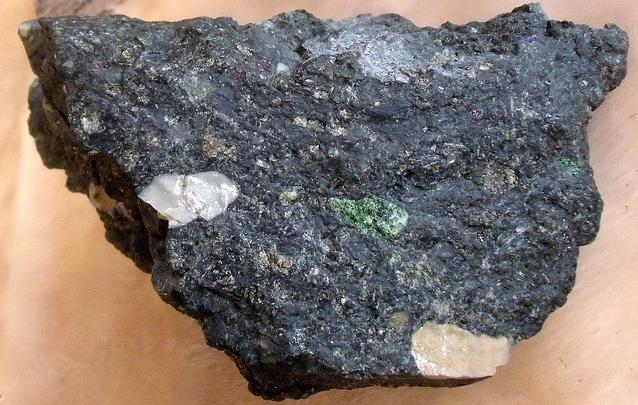
Kimberlite
Photo by Subarcticmike
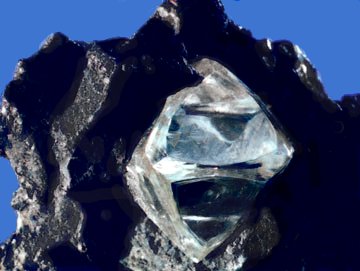
The very name for the diamond is “adamant” meaning roughly that it is indestructible.  The gem we call diamond was known to the ancients when practically the entire earth’s supply came from the region around Golconda, India.  This region in India supplied most of the diamonds in the world until the discovery of alluvial diamonds in Brazil in 1729.  The diamond fields of Brazil produced most of the world’s diamonds for almost a century until diamonds were discovered in South Africa in 1867.  This led to the discovery of diamonds in an ultramafic rock that was named kimberlite after the South African town of Kimberly where the new rock was discovered.

A diamond crystal in a matrix of kimberlite. USGS

The other source of diamonds during antiquity was from western Borneo where they are found in alluvial deposits of Eocene age.  Most of the stones found in these deposits are small and of poor quality.  These diamonds are still being mined mainly by artesianal methods under primitive methods.  To this day nobody has ever discovered the primary source of these diamonds.

During the post World War II period extensive deposits of diamonds were discovered in the Soviet Union by tracing a special type of pyrope garnet that is in high in chromium to its source.  The source was found in kimberlite pipes in Siberia.  Several mines were opened causing the Soviet Union to become one of the world’s largest producers of diamonds.

A princess cut diamond mounted in a ring.
Photo by Stephen Durham

After the discoveries in the Soviet Union the scene shifted to Australia where a new type of deposit was discovered in a type of rock called lamproite.  This has resulted in the development of the largest diamond mine on earth, the Argylle Mine.  Some pf the diamonds found in this mine are colored purple an extremely rare type of diamond.

The diamond discoveries in the Soviet Union and Australia led to the discovery of kimberlite deposits in Canada, Brazil and India.  There are also deposits producing diamonds in Arkansas and eastern Colorado and Wyoming