Total Pageviews

Showing posts with label Gemstone Occurrences. Show all posts

Thursday, January 5, 2012

Gemstone Occurrences in New Jersey


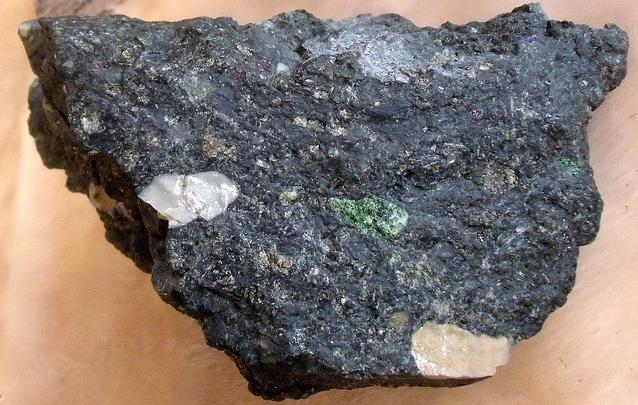
A ruby crystal from Tanzania similar to those found in New Jersey.


Like many of the states of the Northeast New Jersey contains some of the best localities for finding gems in the Eastern United States.  Agate is found throughout the traprock quarries of the state as well as quartz gemstones including amethyst that occurs as cavities in the stone.  Many marine fossils are also found in the state including many fossils of shark teeth. Most of these fossils are found in the Kirkwood formation (Eocene and Miocene) in Monmouth County.

One of the most interesting stones found in the state are so-called Cape May Diamonds that in reality are waterworn quartz crystals that are found on the beaches of Cape May Point along the Delaware River in southern New Jersey.  These stones are the most abundant at Higbee and Sunset beaches in Cape May.  These stones can range in size from the finest sand to one whopper that weighed 3 pounds 14 ounces that is known as the Cape May Diamond that was found in New Castle, Delaware in 1866.

Rubies are rarely found in the white marble at the mining district in Franklin where they are found associated with the zinc mines in Franklin and Sparta.  Many of these stones are small, but are well formed.  The rubies fluoresces red, but the marble matrix doesn’t. Many minerals found on the mine dumps around the area are various minerals of zinc that also fluoresce in brilliant colors under a fluorescent light with some of them even considered gemstones.  Another mineral that is found associated with the zinc minerals is rhodonite a silicate of manganese that is often cut as cabochons.

Bloodstone or heliotrope is found in sparing amounts in the Eastern United States north from Florida with exposures in New Jersey.  This is a member of the quartz family of gemstones that is dark green in color with bright red spots of hematite.  This stone is often cut and used in inexpensive jewelry.
A polished slab of petrified wood.
Photo by Daniel Schwen

In addition to agate the traprock quarries in Passaic County also contain many zeolite minerals as well as datolite and prehnite in large quantities. In many places the traprock quarries have cavities lined with amethyst crystals.  In some areas in eastern New Jersey you can find jasper and petrified wood.

In recent years one of the most valuable gems in North America has been overlooked by collectors is the freshwater pearl found in many of the mollusks in the states many rivers.  The pearl was looked avidly for in the 19th Century, but for a period of inactivity caused by over fishing the mollusks  caused this industry to decline.   

Saturday, September 3, 2011

Gemstone Occurrences in New York:


Herkimer Diamonds from the Ace of Diamonds Mine.
Photo by Rob Lavinsky


You could almost write a book just about gemstone occurrences in Manhattan that has produced beryl, chrysoberyl and some huge garnets.  These are all gems that have been produced from excavations and the rock removed from them.  Most of this rock now resides along the bank of the Hudson River in uptown Manhattan where you can readily get at the excavation spoils from Inwood Park.  The entire southeast part of the mainland has the same kind of gemstones as Connecticut with whom it shares a common border.

Saratoga County has produced beryl and rose quartz from the pegmatites found in the Adirondacks.  Almandine garnets have been produced from a deposit on Gore Mountain in the town of North Creek..  These garnets are embedded in a matrix of gabbro with some of the crystals reaching more then a meter in diameter.  The Barton Mining Company produces the garnets for making abrasives, but sufficient amounts of cuttable material is produced to satisfy the needs of the Rock Hound trade.

In the middle of a city park in Syracuse is a kimberlite pipe that may be diamondiferous or not depending upon who is telling you about it.  This is a swarm of pipes that extend from a coal mine in Pennsylvania to the Monteregian Hills of Quebec. Many of these kimberlite dikes are clustered around Ithaca, but the narrow swarm of kimberlites can be found crossing the state from the Pennsylvania border to Ogdensburg on the St. Lawrence River. None of the NY kimberlites are known to contain diamonds.  Diamonds have been found in the glacial deposits that were brought down from the diamond deposits of Ontario.

Kimberlite
Photo by Sub Arctic Mike


The original discovery of a kimberlite dike in New York occurred in Syracuse in 1837, but was mistaken for serpentine; it wasn’t until 1887 that rocks of this nature were properly identified at Kimberly South Africa that their true nature was discovered.  The kimberlite dikes in New York although they don’t contain diamonds because the magma came from too close to the surface of the earth do contain some other minerals that are considered gemstones providing they are large enough including olivine and spinel.

An interesting deposit of rubies and sapphires are found in the marble deposits of Orange County.  The quantity of stones that have been found in sparse, but the deposit extends into Sussex County New Jersey. These gems were found somewhere between Monroe and Southfield in Orange County. According to the report these gems were less then two carets in weight, and the deposit was sparse. This was a deposit that was worked secretly by two people for some years who took its locality to the grave with them.

When the zinc mine at Edwards was being actively mined they discovered a mass of lazulite weighing more then twenty pounds in the process of mining zinc ore.  This mass was cut up into cabochons and made into jewelry.  Lazulite is one of the components of the semi-precious stone lapis lazuli. 

A stone that is readily identified with New York State is quartz whether it is in the form of amethyst in the trap ridges along the Hudson River in the Haverstraw vicinity, at the old lead mine in Ellenville or in the Little Falls formation crossing the state from west to east where it ends at diamond cliff in Hague on Lake George.  This is the home of the world famous Herkimer Diamond that in reality is a doubly terminated quartz crystal found in cavities in the silicified dolomite of the Little Falls formation.  Various varieties of quartz (silica) gemstones are found throughout New York.  Albany County is noted for its flint and jasper that is found in sand and gravel deposits.  There was even a flint deposit overlooking the Hudson Valley that was worked by the Indians in prehistoric times for flint to make their weapons.

Saturday, July 30, 2011

Gemstone Occurrences in Connecticut

Almandine garnet, Connecticut's state stone.
Photo by Rob Lavinsky


Connecticut is amply endowed with gemstones ranging from andalusite to zircons.  The stones found in Connecticut are found in a variety of terranes although the primary one is pegmatites, but they are also found in the trap ridges of the Connecticut River Valley.  Even more are found as glacial float if you want to use that method of finding gems.

Just in the town where I live, Barkhamsted there are several different verities of gemstones including almandine garnets, beryl, corundum, kyanite, quartz, soapstone, zircon and the usual rock forming minerals.

Connecticut is blessed with many gem bearing pegmatites one series starts in Glastonbury and Crosses the Connecticut River at Middletown and extends almost to the coast of Long Island Sound.  The other belt of pegmatites extends diagonally across the western portion of the state from Hartland to Ridgefield.  Both of these belts contain many of the gemstones found in LCT type pegmatites.  Many of them are Dana localities and one of them, the Maryall Mine is considered to be one of the most important gemstone mines in the United States.  This mine is famous worldwide for its crystals of aquamarine and golden beryl.  It also contains some bright red garnets that can weigh up to several pounds.

Beryl crystals on Feldspar.
Photo by Rob Lavinsky


The trap ridges of the Connecticut River Valley and in Woodbury contain specimens of amethyst, datolite and prehnite that are found in vugs in the trap rock.  Some of these occurrences are also Dana localities. Many of them are also world famous.  Connecticut has over 600 recognized mines that are now abandoned scattered mainly across the western half of the state, but there is still plenty of gems to be found in eastern Connecticut.

Microlite-Elbalite and Lepidolite found in the pegmatites of Connecticut.
Photo by Rob Lavinsky
The beaches in eastern Connecticut are littered with moonstones that have eroded from the granite eastern Connecticut is known for.  Another stop you should make is the Connecticut Mining Museum that is part of the Sloan-Stanley Museum in Kent where many of the minerals found in Connecticut are displayed along with lots of information about the mining industry that used to be found in the state.  According to many authorities modern mining was developed in Connecticut then spread out all over the world.